 Contact Us
Ansys OPTI 302: Ansys POP Analysis
Course Overview:
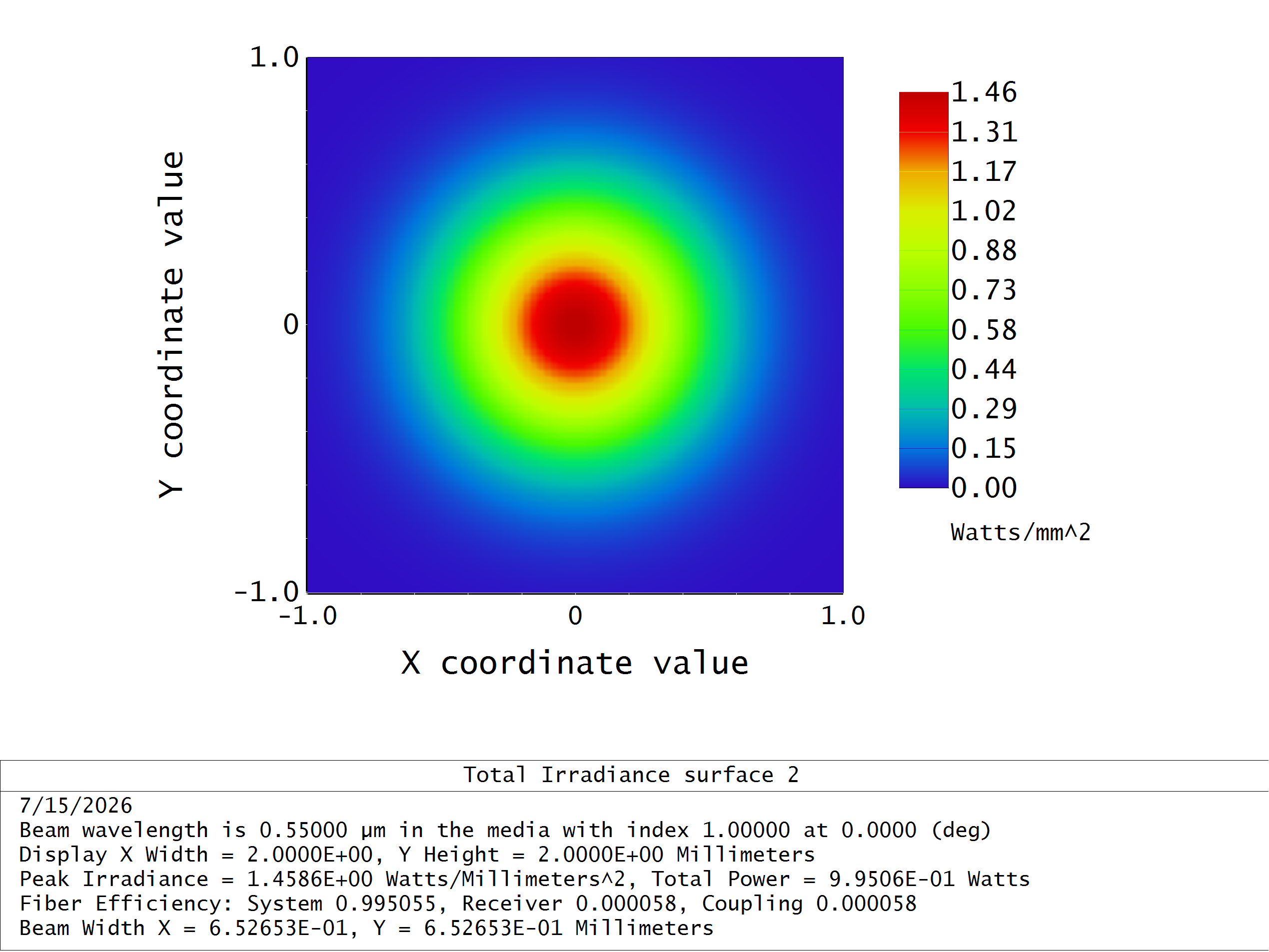
Physical Optics Propagation in Ansys Zemax OpticStudio can model laser beams, diffraction, focusing, apertures, and coherent propagation effects that ray tracing cannot capture, but POP is also easy to misuse because small mistakes in beam definition, grid size, sampling, pilot beam settings, or propagation method can produce convincing but incorrect results. This training teaches optical engineers how to use POP correctly and confidently by connecting the diffraction theory behind POP—including Gaussian beams, Rayleigh range, Gouy phase, Fresnel propagation, angular-spectrum propagation, phase interpretation, and sampling—to practical OpticStudio workflows. Participants will learn how to build reliable POP models, choose appropriate settings, validate results, identify numerical artifacts, and troubleshoot common failure modes for systems involving lasers, beam expanders, focusing optics, apertures, fiber coupling, coherent imaging, and diffraction-limited propagation. The goal is not just to run POP, but to understand when the results are physically meaningful.
Who should take this course:
This course is intended for optical engineers, laser system engineers, application engineers, and technical users who already use Ansys Zemax OpticStudio and need to model coherent beam propagation beyond what geometric ray tracing can reliably capture. It is especially useful for teams working with lasers, Gaussian beams, beam expanders, focusing systems, apertures, fiber coupling, coherent imaging, diffraction-limited propagation, or systems where beam size, phase, diffraction, clipping, or interference effects matter.
The course is best suited for users who have some familiarity with sequential optical design in OpticStudio but want a stronger practical and theoretical foundation for setting up, validating, and troubleshooting POP analyses.
Core proficiencies:
By the end of this course, participants will be able to:
- Understanding when to use POP instead of geometric ray tracing
- Modeling coherent laser beam propagation in OpticStudio
- Defining Gaussian beams, beam waists, Rayleigh range, divergence, and Gouy phase
- Interpreting irradiance, phase, beam size, and wavefront curvature results
- Selecting appropriate grid size, sampling, and beam width settings
- Understanding Fresnel and angular-spectrum propagation methods
- Using and interpreting POP pilot beam settings
- Identifying clipping, diffraction, and aperture effects
- Recognizing numerical artifacts caused by poor sampling or invalid settings
- Validating POP results against physical expectations and first-order calculations
- Modeling beam expanders, focusing systems, apertures, and fiber-coupling scenarios
- Troubleshooting common POP setup and convergence issues
- Building defensible, physically meaningful POP analyses for engineering design decisions
Contact for OPTI 302 Training
Course Agenda | OPTI 302
Module 1: Advanced Optics: Physical Optics Propagator
1.1 What is POP?
- Why POP?
- About POP
- Limitations of POP
1.2 Scalar Diffraction Theory
- Angular Spectrum Propagation
- Fresnel Propagation
- Fraunhofer Propagation
1.3 POP Methodology
- Fresnel Number
- Near and Far Field
- Propagation Methods
1.4 The Pilot Beam
- Pilot Beam Parameters
- Array Propagation
- Sign Conventions for Phase Data
1.5 Propagation
- In and Out of Rayleigh Range
- Propagation Through Arbitrary Optical Surfaces
- Through Non-Sequential Surfaces
- Accounting for Polarization
1.6 How to Use POP Software Intuitively
- Demo 1 – Intro to buttons
- Demo 2 – Fiber Coupling
- Demo 3 – Advanced Example