 Contact Us
Ansys Zemax: Introduction to Non-Sequential
Course Overview:
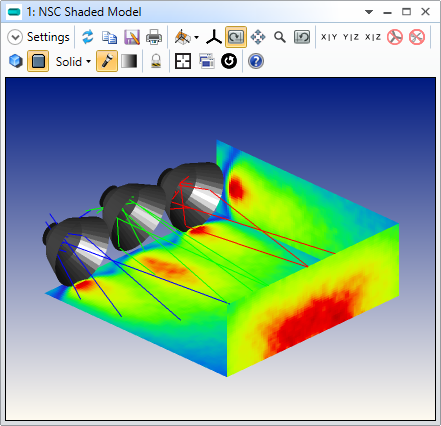
This course is an introduction to non-sequential optical modeling in Ansys Zemax OpticStudio, covering sources and detectors, radiometry and photometry, illumination system optimization, polarization, scattering, complex geometries, and stray light analysis. Learn to model and analyze real-world non-imaging and stray light problems with confidence.
Who should take this course:
- Optical engineers, opto-mechanical engineers, system engineers.
- Users with basic optical design experience who need to analyze illumination systems, scattering, polarization, or stray light effects in real-world optical systems.
With completion of this Ansys Zemax Training, you will become proficient in:
- Non-sequential system setup
- Illumination system optimization
- Polarization and coating modeling
- Scattering and complex geometry modeling
- Stray light analysis
Contact for ZEMAX 102 Training
Course Agenda | ZEMAX 102
Module 1: Introduction to Non-Sequential
- Detector objects
- Source objects
- Color Modeling and Measuring
- Radiometry vs Photometry
- Non-sequential Settings
- Workshop: Color Mixing
Module 2: Illumination Systems
- Optimization in NSC Systems
- Merit Functions
- Optimization of a Parabolic Reflector
- Bitmap Optimization
- Tolerancing in Non-Sequential
- Workshop: Compound Parabolic Concentrator (CPC)
- Workshop: Back Light Module
Module 3: Polarization
- Polarization Ray Tracing
- Jones Matrices
- Thin Film Coatings
- Face Properties
- Ray Splitting
- Workshop: X-Cube Prism
Module 4: Scattering
- Lambertian Scattering Model
- Gaussian Scattering Model
- ABg and Harvey-Shack Model
- Scattering Settings
- Bulk Scattering
Module 5: Complex Object Geometries
- Nesting
- Boolean Objects
- CAD Objects
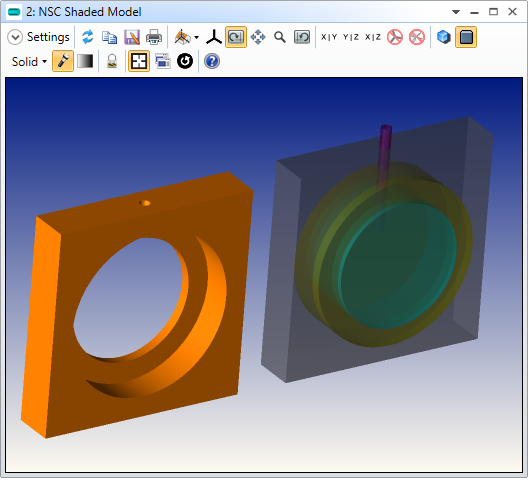
- Workshop: Defining a Complex Object
Module 6: Stray Light Analysis
- Stray Light Overview
- Ghosting
- Techniques for Stray Light Reduction
- Converting to NSC Design
- Filter Strings
- Path Analysis
- Workshop: Maksutov Telescope