 Contact Us
Introduction to Structural Optimization with Generative Design
In mechanical engineering, material efficiency is not simply a cost metric; it is a major driver of performance. In industries like aerospace and automotive, where every measurable gram matters, the ability to reduce mass without compromising function is a direct contributor to innovation. Structural optimization, through techniques like topology optimization and generative design, offers engineers new avenues to achieve both strength and sustainability.
These techniques do more than refine form; they inform function. When guided by advanced simulation tools, engineers can explore thousands of possible configurations, all while respecting critical constraints like load paths, boundary conditions, thermal behavior, and manufacturing processes. The result is an optimal balance between material usage and mechanical integrity.
What is Topology Optimization?
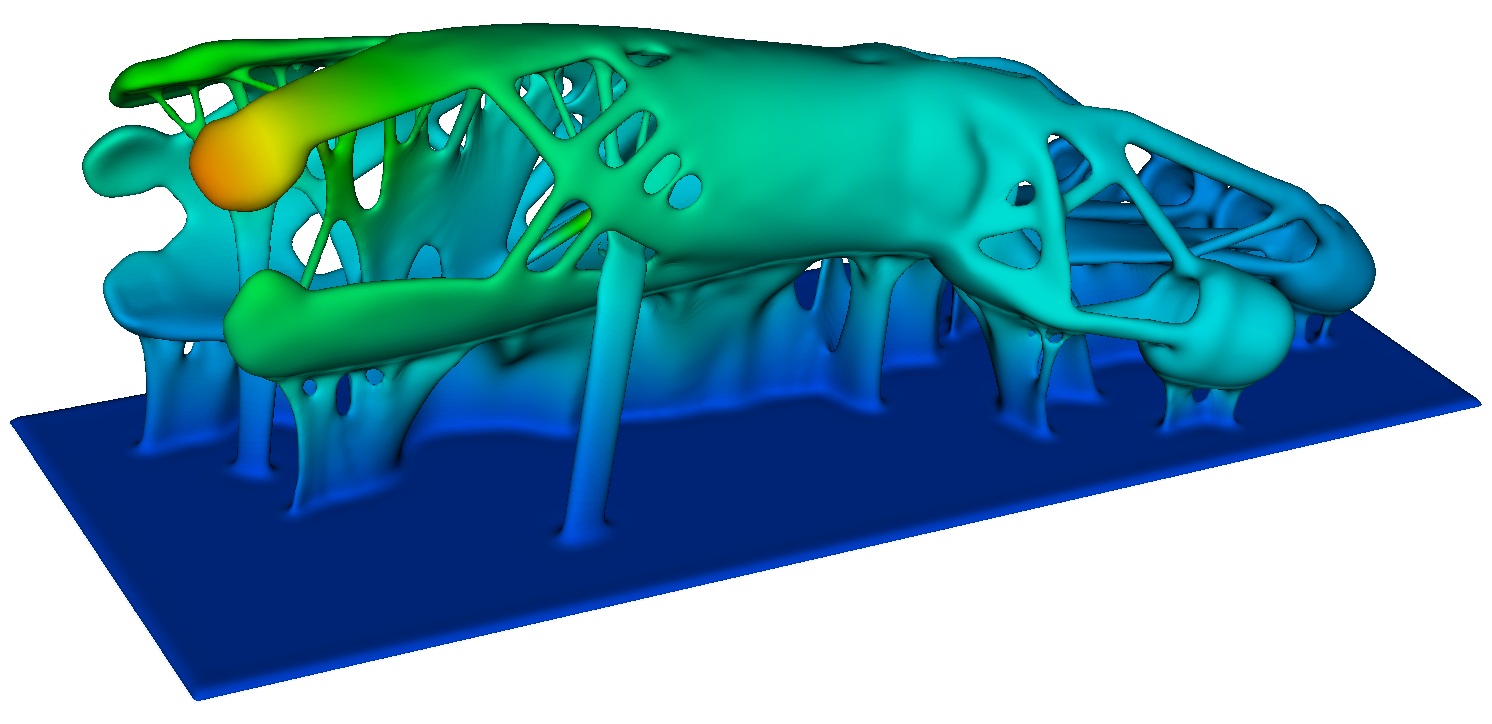
Topology optimization is a physics-based design method that determines the most efficient distribution of material within a given design space. Engineers define performance targets and constraints, such as stiffness, weight limits, and areas to preserve, and the algorithm removes unnecessary material. What remains is a skeletal, highly efficient geometry that serves as the foundation for further refinement.
It’s particularly valuable during early concept development. By exploring various design scenarios using simulation, engineers gain critical insights before committing to a particular shape. This iterative process, when integrated early, reduces the need for redesigns downstream and shortens the time to market.
Structural Optimization with Generative Design: The Next Step Forward
While topology and structural optimization focus on removing inefficiencies, generative design expands the design space by introducing AI and machine learning into the process. It automates the creation of multiple viable design alternatives based on defined parameters such as weight, strength, materials, and manufacturing constraints.
Generative design thrives in applications like additive manufacturing, where design freedom is less limited by traditional fabrication methods. In this context, the software doesn’t merely improve a design; it proposes entirely new geometries that would be almost impossible to arrive at through conventional methods. These organic, lattice-like structures are not only lighter but can often outperform legacy components.
Applications in Aerospace and Automotive Engineering
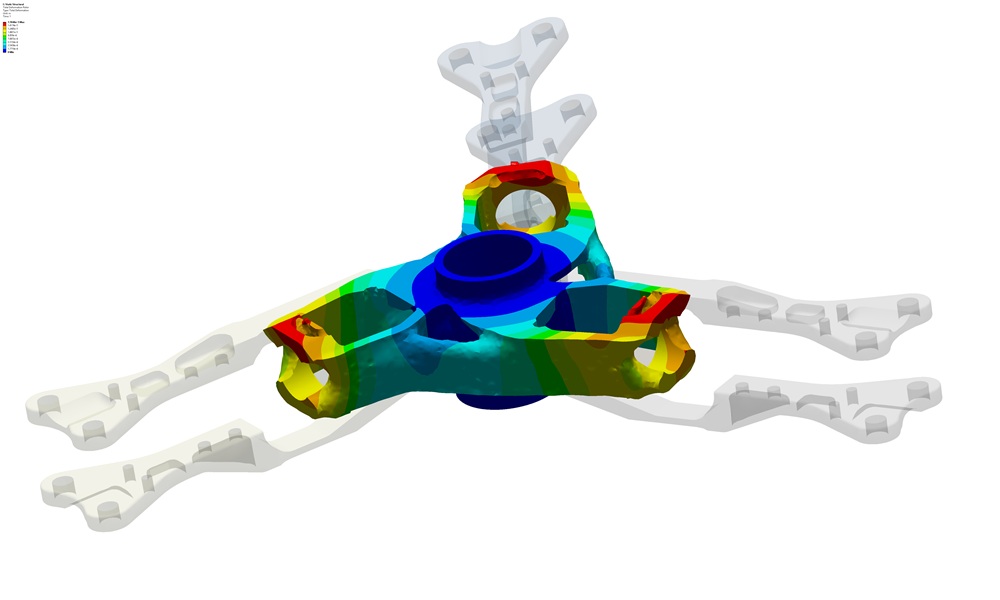
Aircraft manufacturers rely heavily on structural optimization to meet performance and regulatory demands. Brackets, struts, and other secondary structures are now routinely optimized to reduce fuel consumption while preserving or enhancing mechanical resilience. Likewise, automotive OEMs are using topology and generative techniques to develop lighter suspension components, EV battery enclosures, and crash structures, resulting in improved fuel economy and crash safety.
For instance, reducing the weight of a vehicle by just 10% can lead to up to a 6-8% improvement in fuel efficiency (Energy.gov). When multiplied across fleets and production volumes, the environmental and economic implications are significant.
Optimizing for Additive Manufacturing
Additive manufacturing (AM) has emerged as a natural partner to topology and generative design. Because AM (or 3D printing) allows for greater geometric complexity without added cost, it liberates engineers from the constraints of traditional subtractive processes. Structures can now be optimized not just for strength-to-weight ratios but also for thermal dissipation, vibration damping, and multi-functional performance.
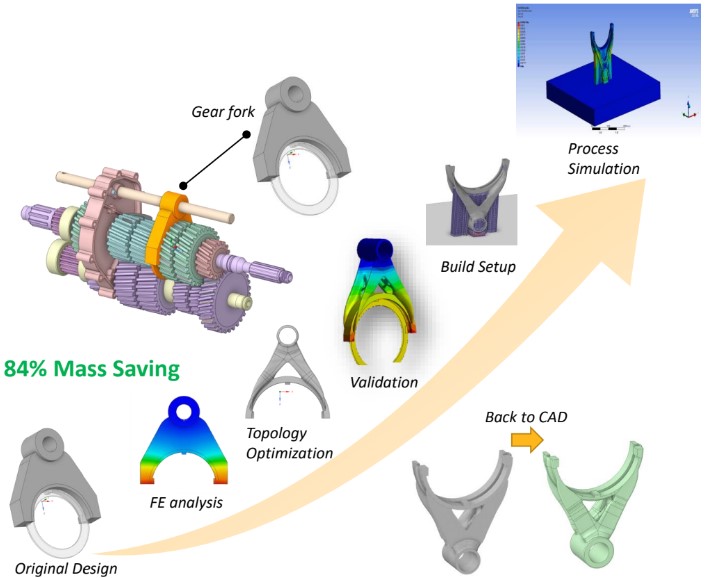
Simulation tools play a vital role here. Predictive models allow engineers to anticipate deformation during printing, ensure manufacturability, and validate that the part performs as intended once produced. This end-to-end digital thread from simulation to manufacturing enables faster iteration, better design fidelity, and reduced time to certification.
Simulation-Driven Design at Its Best
By coupling structural optimization with simulation, engineers reduce guesswork and gain confidence. They can test how a design will respond to various real-world conditions before a single prototype is built. This proactive approach identifies design flaws earlier, supports certification efforts, and helps meet increasingly ambitious sustainability goals.
SimuTech Group supports engineering teams in applying these techniques using Ansys simulation platforms, offering the training and technical consulting needed to transform ideas into optimized, manufacturable designs. Whether you’re developing aerospace components, automotive structures, or high-performance consumer devices, integrating topology and generative design with simulation is no longer optional—it’s essential.
Creating a Lighter, Smarter Future Through Structural Optimization and Generative Design
Structural optimization is about engineering smarter; creating parts that do more with less, support sustainability initiatives, and unlock new design possibilities. As manufacturing technologies evolve, the synergy between simulation, optimization, and production will only grow stronger.
The future of design belongs to those who harness its full potential. At SimuTech Group, we’re here to help you lead the way.