 Contact Us
Introduction to Space Capsule Re-Entry Optimization
The atmospheric re-entry of space capsules is a highly complex process, where aerodynamic forces and thermal loads are strongly influenced by operational conditions. Among these, angle of attack (AoA) and Mach number (Ma) play a critical role in determining heat flux, stability, and deceleration profiles. Even small variations in these parameters can significantly impact overall vehicle performance and safety margins.
To efficiently analyze and optimize such sensitivities, optiSLang provides an integrated environment for design exploration. Its capabilities in Design of Experiments (DoE), sensitivity analysis, and metamodel-based optimization allow engineers to identify key drivers and improve system robustness. Additionally, optiSLang’s license multiplication (parallel execution) capability enables large numbers of simulations to run simultaneously, dramatically reducing turnaround time for computationally expensive re-entry studies.
This blog focuses on leveraging optiSLang to explore the design space defined by AoA and Ma, using sensitivity-driven methods to guide optimization toward more reliable and efficient capsule re-entry performance. Particular attention is given to evaluating aerodynamic outputs such as drag and lift forces, enabling a clearer understanding of how operational conditions influence vehicle behavior and overall performance during atmospheric entry.
Using optiSLang for Design Exploration
Building on a previously developed CFD model in Ansys Fluent for space capsule re-entry, this workflow leverages that validated setup as the foundation for an optiSLang project. By directly integrating the existing Fluent model, the focus shifts from model development to systematic exploration and optimization of key operational parameters, ensuring consistency while accelerating analysis. The corresponding input and output variables of the Fluent model are shown in Figure 1.
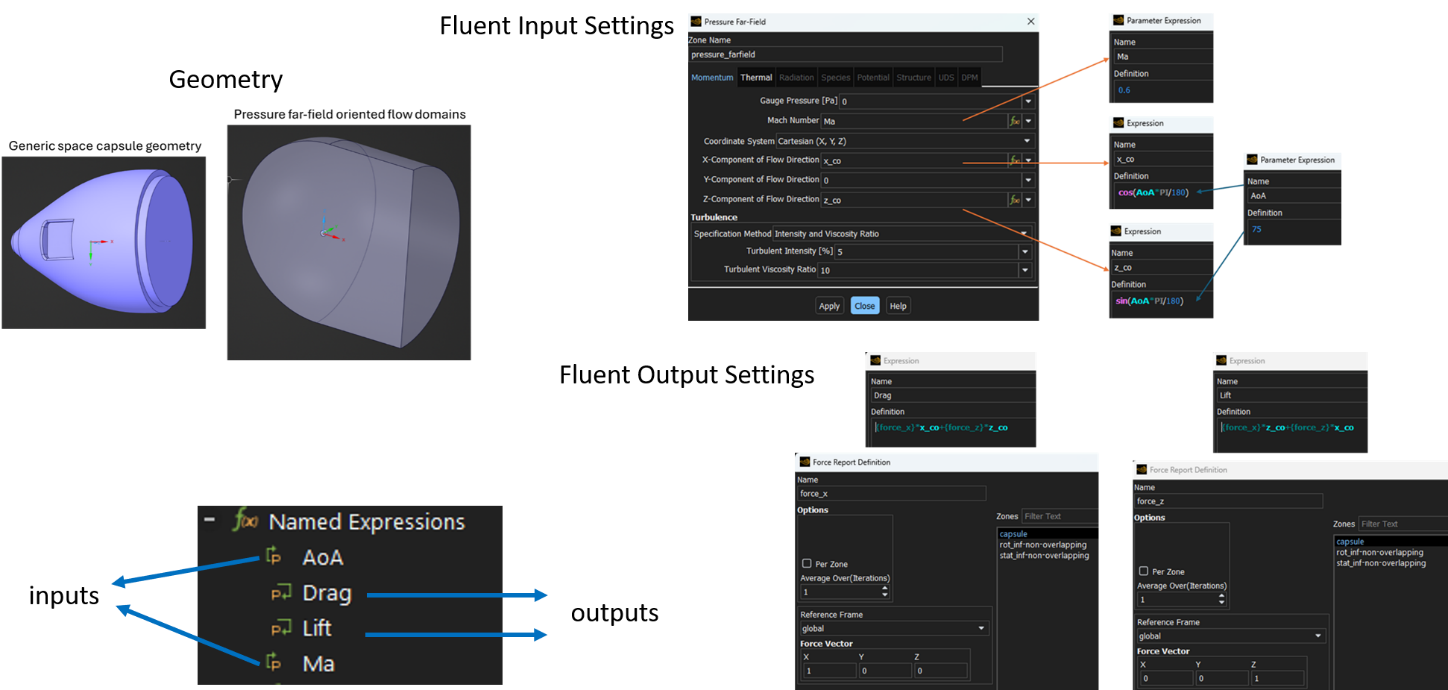
Within optiSLang, the Fluent simulation is parameterized with AoA and Mach number defined as input variables. These parameters are then varied automatically through a Design of Experiments (DoE), enabling a structured sampling of the design space. The corresponding outputs—drag and lift forces—are extracted from each simulation run, forming the basis for sensitivity analysis and response surface generation.
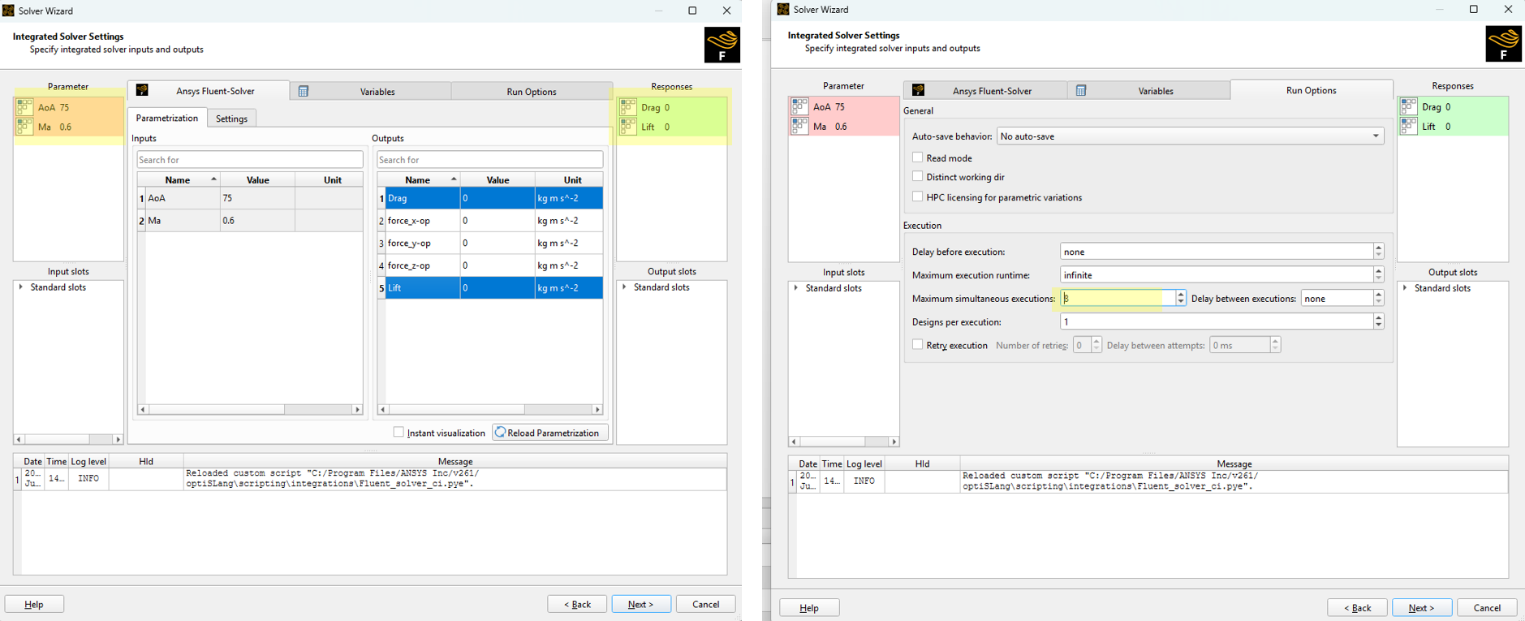
Once the inputs and outputs for optimization are defined in our space capsule re-entry project in optiSLang, the maximum number of simultaneous simulations can be specified (Figure 2). By enabling multiple Fluent simulations to run concurrently across available licenses and computational resources, optiSLang significantly reduces turnaround time for parametric sweeps. Users can configure up to eight simultaneous simulations per license, allowing for efficient scaling of large design studies while maintaining optimal use of available resources.
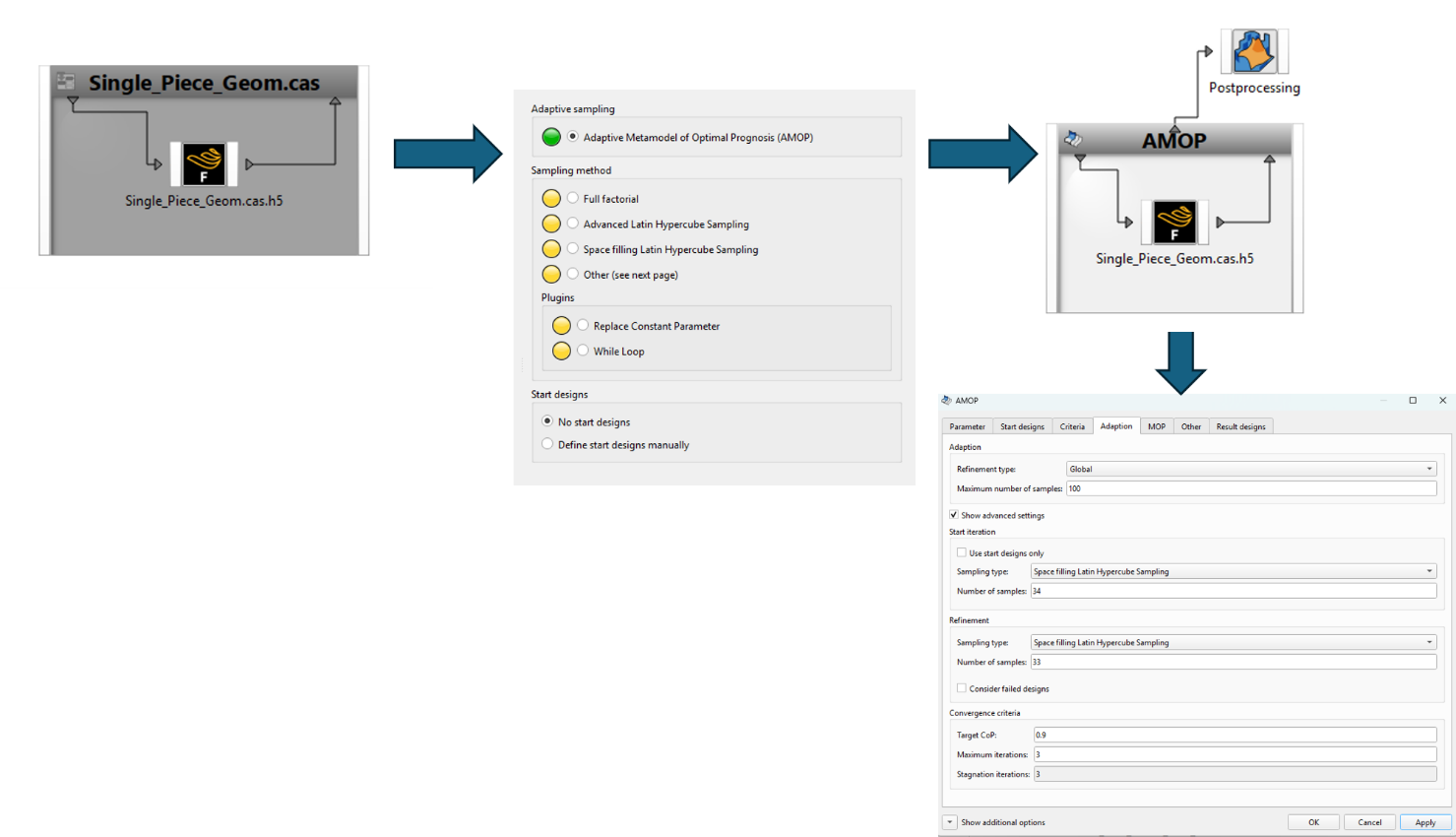
Using the Sensitivity Wizard in the Fluent project, the AMOP model is constructed. The maximum number of samples and the sampling strategy for the Design of Experiments (DOE) can then be tailored to the specific needs of the study (Figure 3).
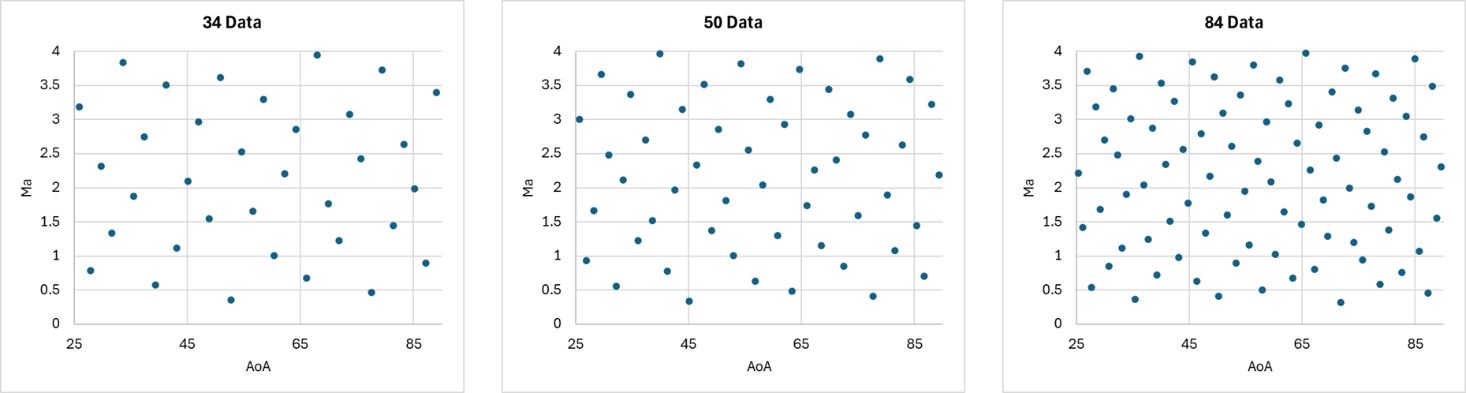
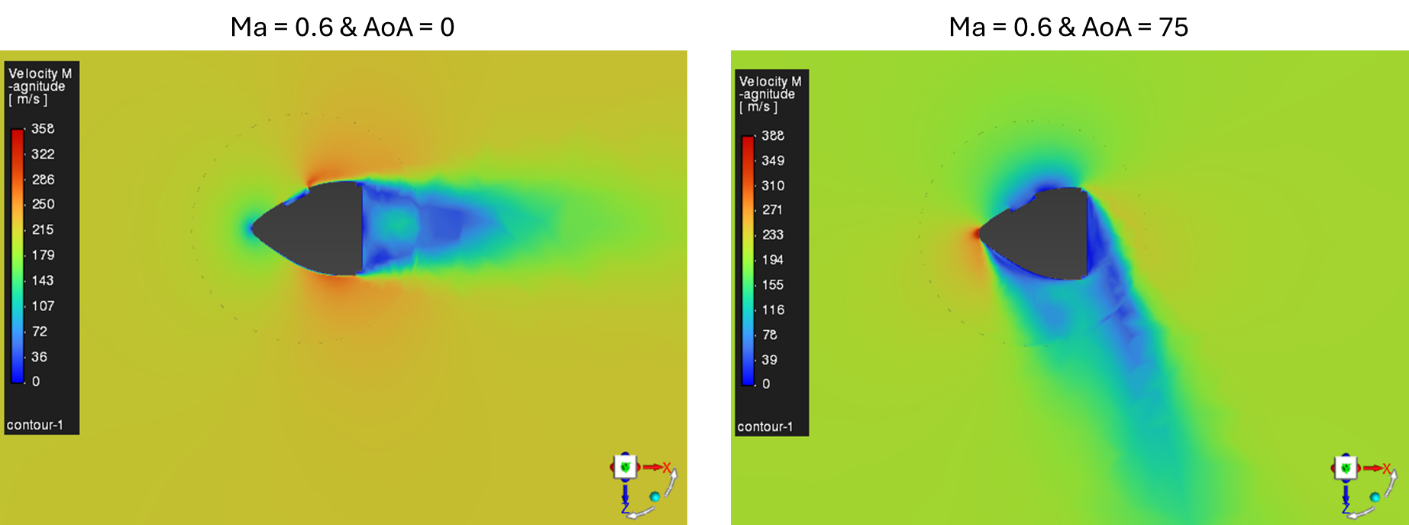
For the range of AOA and Ma considered, the distribution of the designs is shown in Figure 4 for three different cases.
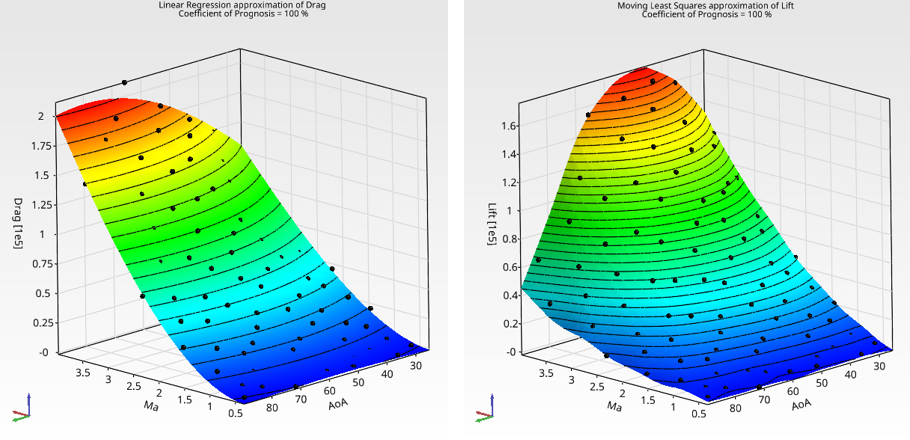
The response surface is created with 100% coefficient of prognosis with 84 data model (Figure 5).
Space Capsule Re-Entry Optimization with optiSLang
In addition to parametric studies, optiSLang enables automated optimization of aerodynamic performance for the space capsule re-entry optimization case. Typical objectives include minimizing drag and maximizing the lift-to-drag ratio (L/D) across the operating envelope defined by angle of attack and Mach number.
The Multi-Objective Optimization (MOP) solver allows optiSLang to efficiently evaluate a large number of design scenarios and identify configurations that meet the desired performance criteria. Instead of manually testing individual cases, the solver systematically explores the design space, processing thousands of design combinations in seconds. This optimization capability provides rapid insight into how changes in AoA and Mach number influence space capsule re-entry aerodynamic performance.
To further streamline the workflow, optiSLang offers a One-Click Optimizer, which automates the setup and execution of the optimization process. With minimal user input, it configures the appropriate methods, generates the required sampling, builds surrogate models, and launches the optimization loop. This significantly lowers the barrier to entry while ensuring a robust and efficient optimization strategy.
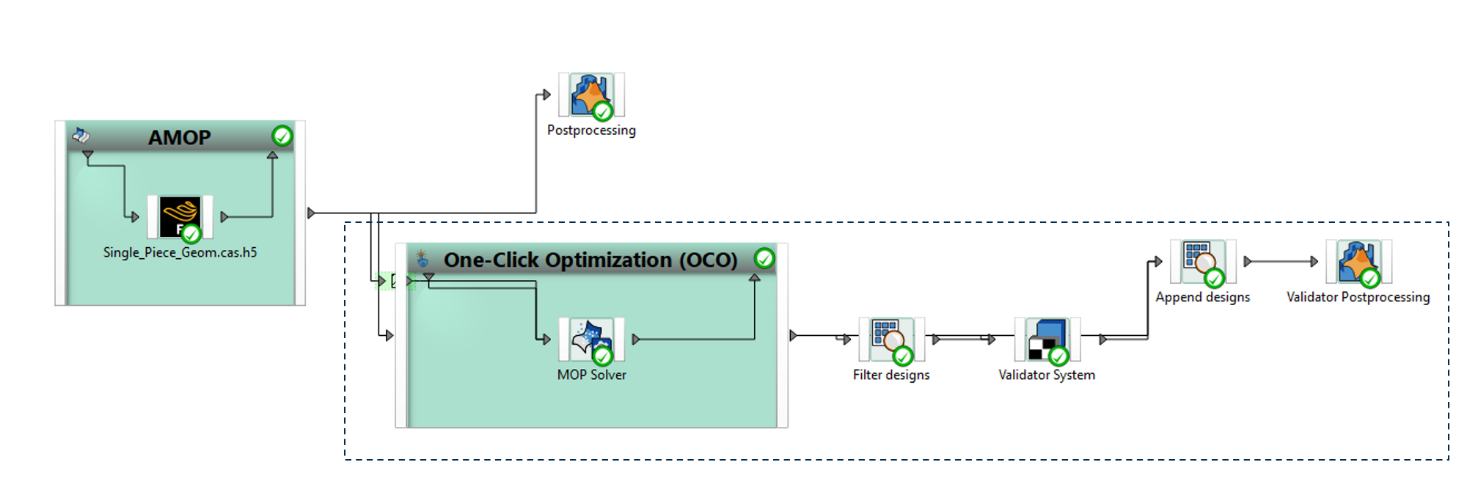
Once the optimizer is deployed over the AMOP model, the project is updated, as shown in Figure 6.
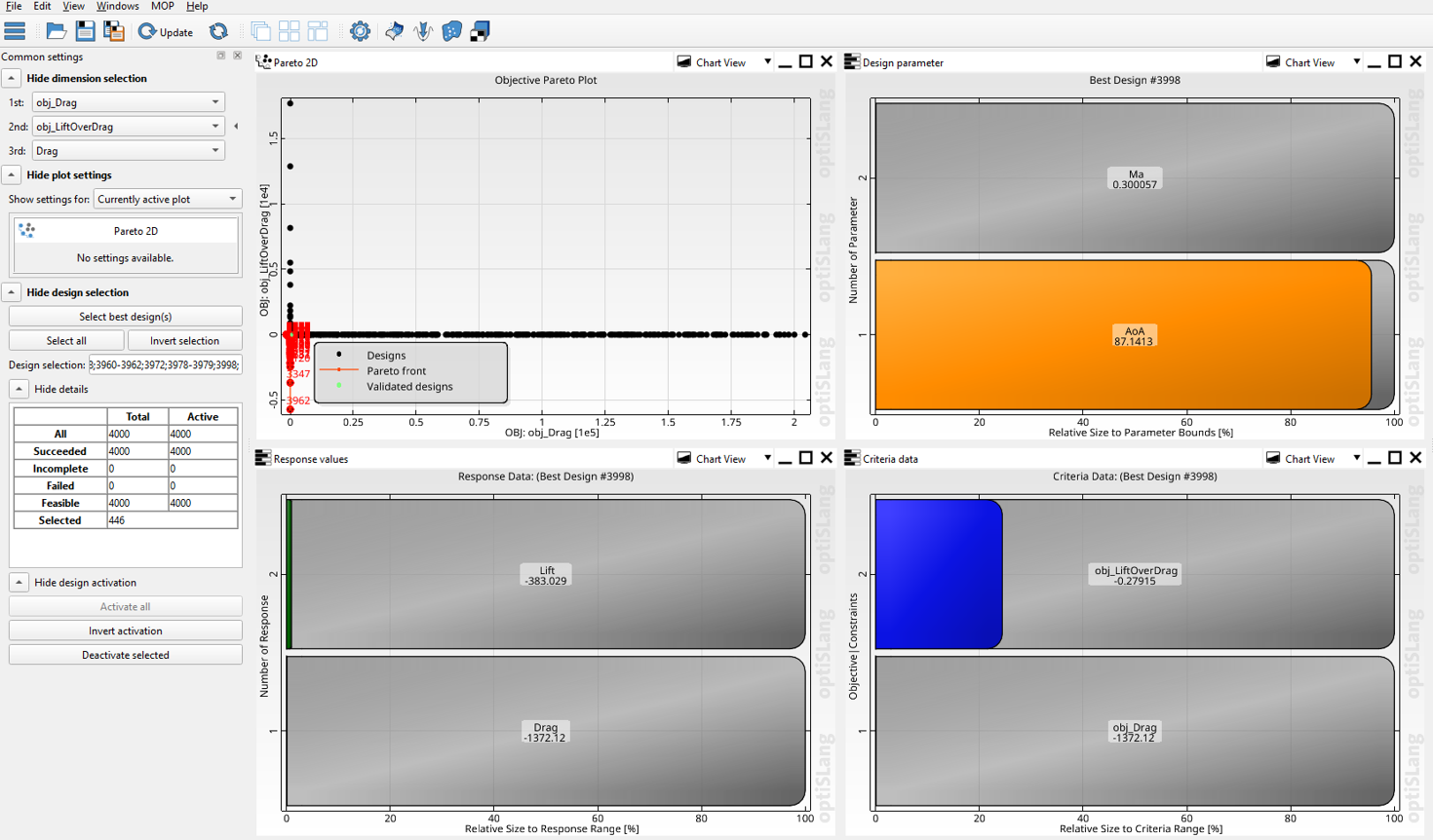
In the postprocessing view, optiSLang provides a clear summary of the optimization results by highlighting the best-performing design along with its corresponding input and output values (Figure 7). Users can directly identify the optimal combination of angle of attack and Mach number, and immediately assess key performance metrics such as drag and lift-to-drag ratio. The interface presents these results in an intuitive format, often combining tables and interactive plots, allowing for quick comparison between candidate designs. This streamlined visualization enables engineers to rapidly interpret results, validate trends, and make informed decisions without manually parsing large datasets.
Conclusion
optiSLang provides a comprehensive and efficient framework for analyzation and aerodynamic optimization of a space capsule on re-entry, particularly when exploring key operational parameters such as angle of attack and Mach number. Through the Sensitivity Wizard, users can rapidly build AMOP surrogate models and tailor DOE sampling strategies, while license multiplication enables multiple Fluent simulations to run in parallel, drastically reducing turnaround time for large parametric sweeps. The One-Click Optimizer further simplifies the workflow by automatically configuring and executing the optimization process, leveraging the MOP solver to evaluate thousands of design combinations in seconds. Finally, the intuitive postprocessing interface presents the best design along with its key inputs and outputs, enabling quick interpretation of results and informed decision-making.
The details of the optiSLang model and the corresponding procedure can be found in the following video:
Optimize Space Capsule Re-Entry Performance
Use Ansys optiSLang to explore Mach number and angle-of-attack optimization variations, identify key aerodynamic drivers, and optimize drag and lift-to-drag performance across the re-entry envelope. Explore Ansys optiSLang
Explore More in the Series
Follow the full workflow from high-fidelity CFD through design optimization and AI-driven prediction. Explore the other articles in this series to see how Ansys Fluent, optiSLang, and SimAI Pro work together to accelerate space capsule re-entry analysis.

Ertan Taskin, Ph.D., Chemical Engineering
Principal Engineer, SimuTech Group
Ertan is a Principal Engineer with more than two decades of experience in CFD, fluid-structure interaction, and biomedical device design. He has advanced ventricular assist devices, transcatheter heart valves, and artificial lungs through hydraulic optimization, in vitro validation, predictive modeling, and AI-driven data analysis. His recent work integrates machine learning for performance prediction and design optimization. His career includes senior engineering roles at Medtronic, HeartWare, Roketsan, and Ozen Engineering, where he led projects spanning medical devices and aerospace propulsion. Ertan’s expertise includes blood damage modeling, uncertainty quantification, integrated thermo-fluid systems, and AI-assisted simulation workflows. He holds a Ph.D. in Chemical Engineering from Worcester Polytechnic Institute, along with Master’s and Bachelor’s degrees in Chemical Engineering from Middle East Technical University.