
 Contact Us
The Importance of Thermal Management
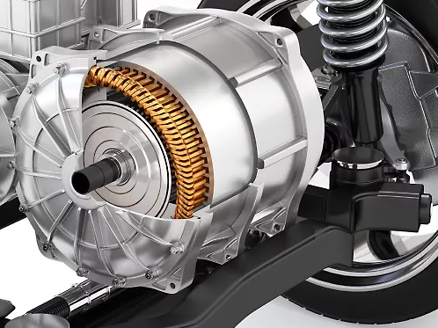
Effective thermal management is essential in electric vehicle (EV) design, especially for traction motors. These motors convert electrical energy into mechanical motion and are central to the vehicle’s overall performance and efficiency.
Managing their heat is essential, not only to maintain optimal functionality but also to extend the vehicle’s range and life. One practical scenario where cooling plays a key role is during high-speed or uphill driving, where motors generate significant heat. Without effective cooling strategies like water jacket and oil spray cooling, the motors could overheat, leading to decreased efficiency or potential failures.
What Are Cooling Techniques for Electric Motors?
Two prevalent cooling techniques are central to maintaining motor temperature in EVs: water jacket and oil spray cooling. Each method provides distinct benefits suitable for different operational demands.
Water Jacket Cooling: This technique involves encasing the motor’s stator in a shell filled with circulating water. It’s a straightforward approach praised for its simplicity and effectiveness. “In countless applications, including EV traction motors, water jacket cooling is considered one of the least complicated cooling methods” (source). Its reliability and ease of integration make it a preferred choice for many vehicle manufacturers.
Oil Spray Cooling: Tailored for scenarios where components reach high temperatures, this method involves spraying oil directly onto overheated parts, such as the rotor and bearings. It is especially beneficial under high-load conditions where traditional cooling methods might struggle. “As the name indicates, in oil spray cooling, oil is sprayed on motor components that are most likely to heat up under high loads; oil absorbs that heat” (source), ensuring effective heat management even during intense operations.
How Is Simulation Used to Test Electric Motor Cooling?
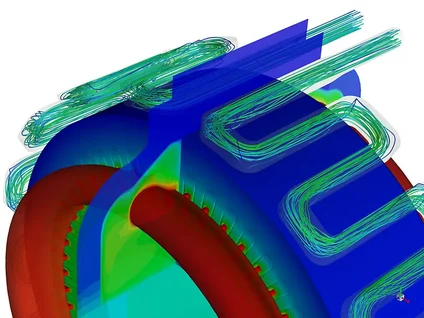
Advanced simulations are vital for designing and optimizing these cooling techniques. Tools such as Ansys Motor-CAD and Ansys optiSLang enable engineers to model thermal behavior and interactions accurately, enhancing design efficiency and performance. “Front-loading design decisions compresses the overall development cycle by focusing on the evaluation of electromagnetic and thermal performance over the entire operating range envelope”. Such tools help predict potential issues and solutions early in the design process, saving time and costs.
Why Is Simulation Important for Electric Motor Design?
The strategic use of simulation supports not only technical validations but also facilitates cross-disciplinary collaboration. “Accurate, timely simulation serves as evidence for management signoff and as a collaboration tool for interdisciplinary teams”. By incorporating advanced simulations, design teams can ensure that their cooling strategies are both efficient and robust, leading to better-performing, more reliable electric vehicles.
Water Jacket Cooling: Simplicity and Effectiveness
What Is Water Jacket Cooling?
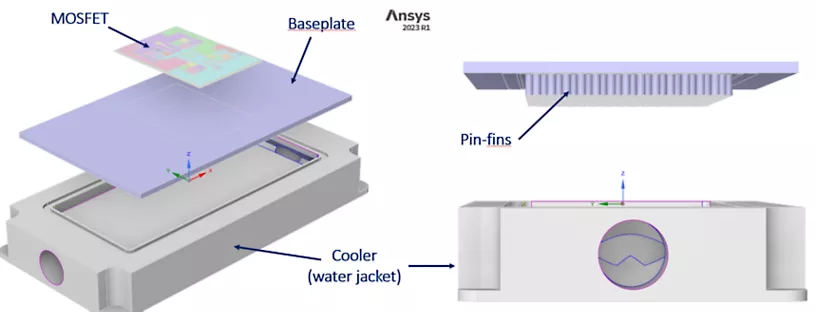
Water jacket cooling is a straightforward yet highly effective method for managing the heat generated by electric vehicle (EV) traction motors. This system involves encasing the motor’s stator in a water-filled shell that circulates water, absorbing heat produced during operation.
This method is praised for its simplicity and reliability, making it a popular choice in various applications. “In countless applications, including EV traction motors, water jacket cooling is considered one of the least complicated cooling methods”. Its widespread use is a testament to its effectiveness and ease of integration.
How Does Water Jacket Cooling Work?
The operation of water jacket cooling is elegantly simple: water circulates around the stator through a specially designed casing, where it picks up heat from the motor before exiting. The heated water is then cooled down externally before being recirculated. This continuous heat removal maintains optimal motor temperatures and prevents overheating, which is important for sustaining motor efficiency and extending its lifespan.
What Are the Advantages of Water Jacket Cooling?
The primary advantage of water jacket cooling is its ability to provide reliable, efficient thermal management without complicating the motor design. “The water jacket strategy provides powerful cooling, considering its simplicity”, highlighting its effectiveness in a range of operating conditions.
Additionally, integrating this method into the broader vehicle cooling system can lead to overall design simplifications. “With an effective cooling system on the traction motor, designers could take a simpler approach for the overall vehicle cooling system”, suggesting how an efficient motor cooling solution can reduce the need for more complex system-wide cooling strategies.
How Are Water Jacket Cooling Systems Designed in Electric Motors?
Incorporating water jacket cooling into motor design requires careful planning to ensure maximum heat-transfer efficiency. Key considerations include the placement and size of the water channels, which must be optimized based on the motor’s specific heat generation patterns.
Effective design is important for ensuring comprehensive coverage and maximizing cooling efficiency. “Designers must have a solid understanding of their thermal performance needs to make an educated selection”. Understanding these needs allows for a tailored approach that can significantly improve the motor’s performance and durability.
Which Is Better, Water Jacket Cooling or Oil Spray Cooling?
Water jacket cooling remains a preferred choice for motor designers due to its simplicity, effectiveness, and reliability. As the automotive industry continues to evolve toward more electrified solutions, the importance of efficient and reliable cooling methods, such as water jacket cooling, becomes increasingly vital to ensuring that traction motors perform optimally under all conditions.
Oil Spray Cooling: Handling High Thermal Loads
What Is Oil Spray Cooling?
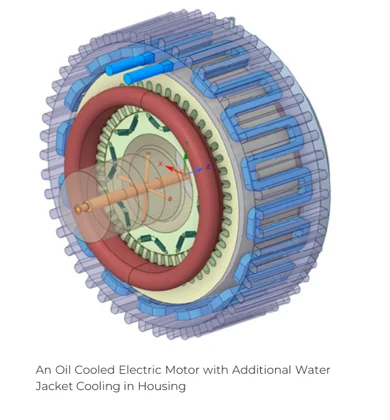
Oil spray cooling is an advanced method used in electric vehicle (EV) traction motors to effectively manage high thermal loads. This technique involves spraying oil directly onto the motor components that are most susceptible to overheating, such as the rotor and bearings.
It is particularly valuable in high-performance scenarios where traditional cooling methods may not suffice. “As the name indicates, in oil spray cooling, oil is sprayed on motor components that are most likely to heat up under high loads; oil absorbs that heat”, providing targeted and effective heat management.
How Does Oil Spray Cooling Work?
The mechanism behind oil spray cooling is straightforward yet highly effective. The oil sprayed onto the hot components absorbs excess heat, and the heated oil is then circulated away for cooling before being reused.
What Are the Benefits of Oil Spray Cooling?
This direct cooling approach is especially beneficial for managing peak temperatures and maintaining motor efficiency under demanding conditions. “Oil cooling adds complexity, but it’s highly effective”, illustrating that despite the added complexity, the benefits in terms of improved thermal management are substantial.
How Important Is Simulation for Designing Oil Spray Cooling Systems?
Simulations play a key role in optimizing oil spray cooling systems. Advanced simulation tools enable engineers to accurately model oil distribution and heat absorption, ensuring the oil reaches all critical areas. This helps determine the optimal amount and pattern of oil spray required for maximum cooling efficiency.
“Engineers using oil spray cooling can use a two-phase computational fluid dynamics (CFD) model to predict oil distribution and splashing on critical motor components”. These insights are essential for fine-tuning the cooling process and achieving the best possible thermal management outcomes.
How Are Oil Spray Cooling Systems Designed?
Implementing oil spray cooling in an EV traction motor involves several key considerations. The choice of oil, for example, is important, as it must have the appropriate thermal properties and viscosity to effectively absorb and transfer heat. Additionally, the spray nozzle design must ensure even coverage and sufficient cooling of the motor’s hotspots. Proper configuration of these elements is vital for the cooling system’s success, leading to improved motor performance and longevity.
What’s the Current Landscape for Oil Spray Cooling in Electric Motors?
As technology advances, so does the potential for innovative cooling solutions like oil spray cooling. Continuous improvements in fluid dynamics and materials science are expected to further enhance the effectiveness of this method.
“Proper cooling can extend component life and potentially minimize package size and weight by ensuring there are no extraneous components”, highlighting the ongoing advancements and potential future improvements in oil spray cooling technology.
Oil spray cooling is an essential technique for managing high thermal loads in high-performance EV traction motors. With its direct and effective cooling capabilities, along with ongoing improvements through simulation and materials science, this method remains a critical solution for the demanding thermal management needs of modern electric vehicles.
Comparing Cooling Techniques Using Simulation
How Can Simulation Enhance Electric Motor Cooling Analysis?
Engineering simulations are invaluable in the design and evaluation of cooling systems for electric vehicle (EV) traction motors. These tools enable designers and engineers to visualize and quantify how different cooling techniques will perform across a variety of operational conditions.
This insight is critical to ensuring that the cooling methods not only meet the motor’s specific needs but also enhance its overall performance and efficiency. “Front-loading design decisions compresses the overall development cycle by focusing on the evaluation of electromagnetic and thermal performance over the entire operating range envelope”, emphasizing the strategic importance of simulation in optimizing motor designs.
What Are the Best Simulation Tools for Electric Motor Thermal Management?
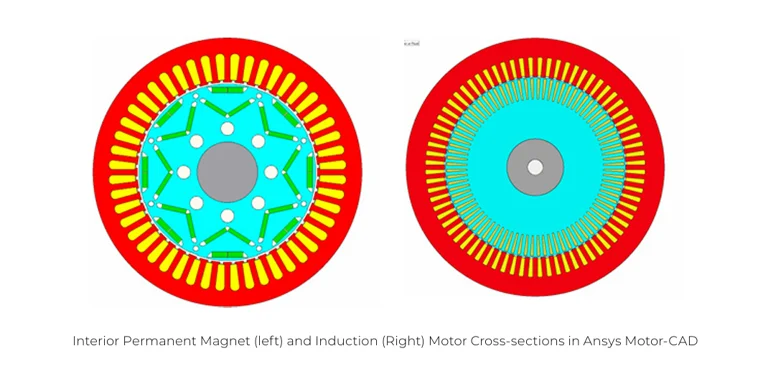
Ansys Motor-CAD and Ansys optiSLang are leading simulation tools for motor thermal management. They provide detailed analyses of both water jacket and oil spray cooling methods, enabling engineers to explore various scenarios and their impacts on motor performance.
“Fast and robust tools like Ansys Motor-CAD and Ansys optiSLang help designers predict concept feasibility and ensure that design decisions, like traction motor type, are optimal across all design requirements”. These tools are essential for making well-informed decisions that balance the complexities and costs of cooling systems with their benefits.
How Are Water Jacket and Oil Spray Cooling Techniques Analyzed Through Simulation?
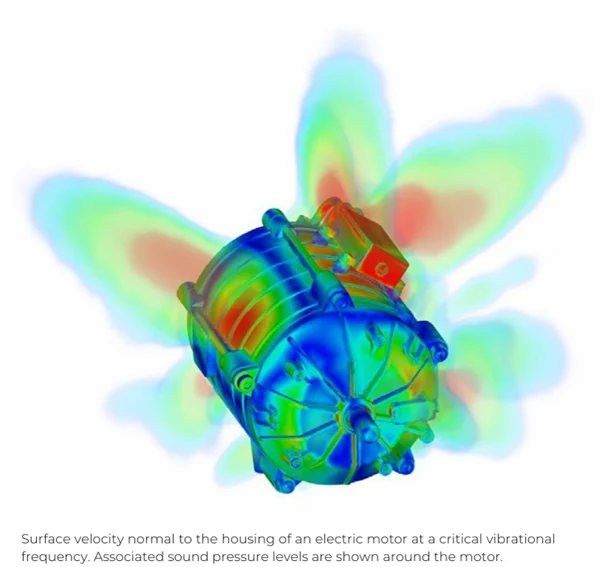
Through simulation, engineers can compare the effectiveness of water jacket and oil spray cooling methods under different conditions. This comparative analysis helps identify which cooling strategy is most appropriate for specific motor designs and use cases. The insights gained from these simulations are critical in understanding each method’s strengths and limitations.
“Further, Ansys can simulate all methods of cooling: water, oil spray, and others… Proper cooling can extend component life and potentially minimize package size and weight”. This analysis ensures that the selected cooling technique aligns with the motor’s overall design goals and operational demands.
What Are Future Trends in Simulation and Cooling Technology?
As simulation technology advances, it is poised to play an even greater role in the development of innovative cooling solutions for traction motors. These advancements are expected to drive the development of new methods that could revolutionize motor thermal management.
“Accurate, timely simulation serves as evidence for management signoff and as a collaboration tool for interdisciplinary teams”, suggesting that the future of motor design will heavily rely on these advanced tools to facilitate greater efficiency and collaboration across various engineering disciplines.
Implementing Advanced Cooling in Motor Design
Why Are Advanced Cooling Systems Important for Electric Motors?
Advanced cooling systems are essential for maintaining the performance and extending the lifespan of electric vehicle (EV) traction motors. As motors are pushed to higher power levels and become more compact, effective thermal management becomes essential. “EV traction motor systems require cooling to ensure that electronic components operate efficiently for maximum vehicle lifespan”. This highlights the critical role that sophisticated cooling solutions play in meeting the evolving demands of modern electric vehicles.
What Are Strategies for Optimizing Electric Motor Cooling?
Multiphysics analysis is key to designing and optimizing cooling strategies. It allows engineers to consider various physical phenomena — like heat transfer and fluid dynamics — together, providing a comprehensive view of how cooling systems influence motor performance.
“Multiphysics analysis offers detailed insights to help designers figure out the most efficient ways to increase power density while adhering to strict size and weight limits”. Such analysis not only improves cooling efficiency but also ensures that the motor operates reliably under all conditions.
What Does the Design Process Look Like When Testing Advanced Cooling Techniques?
Incorporating advanced cooling techniques requires a thoughtful and detailed approach during the design phase. Simulation workflows are invaluable here, as they allow designers to explore various cooling options and assess their impact before final implementation. “Implementing simulation workflows can improve power density, energy efficiency, and operational life while meeting design requirements, industry standards, and safety regulations”. This ensures that the selected cooling technologies are not only effective but also practical and sustainable.
Advanced cooling systems are vital for optimizing the performance and durability of EV traction motors. As the sector continues to evolve, integrating these systems with advanced simulations will be key to developing more efficient and powerful electric vehicles. For more detailed information and a deeper understanding of the technologies discussed here, read the white paper referenced throughout this blog post, which provides comprehensive insights into advanced cooling techniques for EV traction motors.
Working on thermal management for your electric motor designs? SimuTech Group’s electric machine design consulting team can help you evaluate and optimize cooling strategies using Ansys Motor-CAD and multiphysics simulation. For a deeper look at Motor-CAD and optiSLang working together, download our eBook on synergizing simulation for peak electric motor performance. Contact us to get started.