 Contact Us
Why Use the 3-2-1 Method in Ansys Mechanical?
A static structural model must be constrained enough to prevent rigid body motion, but those constraints should also reflect how the part is supported in the real world. In many analyses, choosing appropriate boundary conditions is straightforward.
Free-floating models, large thermal-growth problems, and similar cases can be more difficult. A simple fixed support may restrain legitimate deformation and introduce artificial stresses near the constrained region.
The 3-2-1 method provides a practical way to remove all six rigid-body degrees of freedom while minimizing unnecessary restraint. The method uses three carefully selected nodes and progressively constrains three, two, and one translational degrees of freedom.
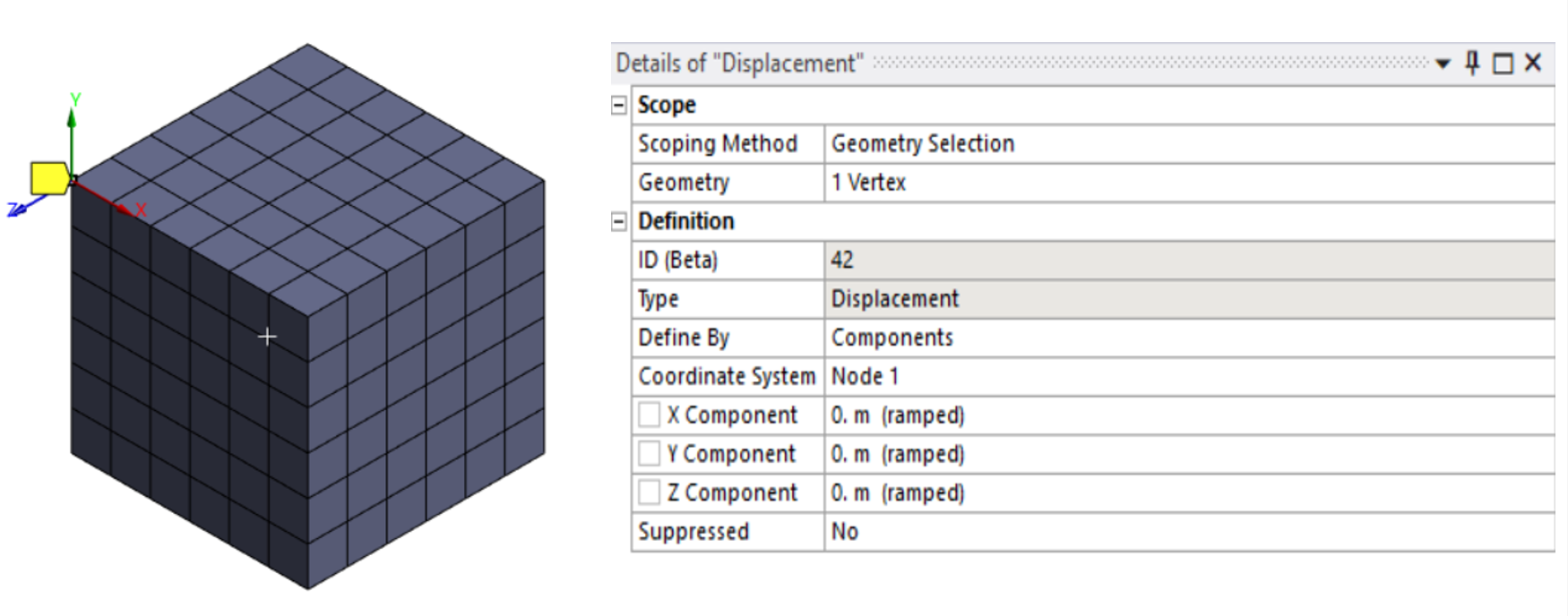
- Constrain Node A in Three Directions: Select one node (Node A) of the model and constrain it in all three degrees of freedom (DOF), as shown below. This will prevent translational rigid body motion in all three directions but still allows all three rotational rigid body motion.
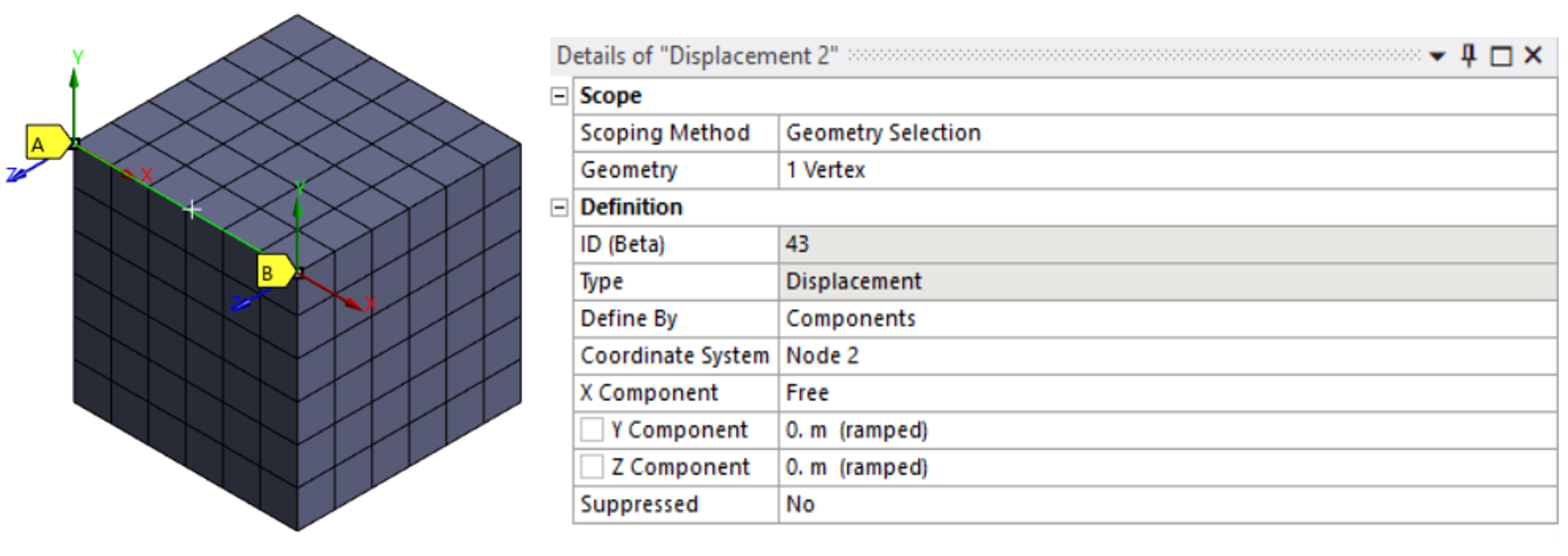
- Constrain Node B in Two Directions: Next, select a second node (Node B). This will form a line between node A and node B. Constrain node B in the two perpendicular directions from the line that is formed from node A and node B. This constraint will prevent rotational rigid body motion in two directions. The model will still be able to rotate around the line that is formed in-between node A and node B.
- Constrain Node C in One Direction: Finally select a node (node C). This will create a plane between all three nodes that have been selected. Constrain this node in the normal direction of the plane. This final constraint will prevent the last rotational rigid body motion around the line that is formed between nodes A and B.
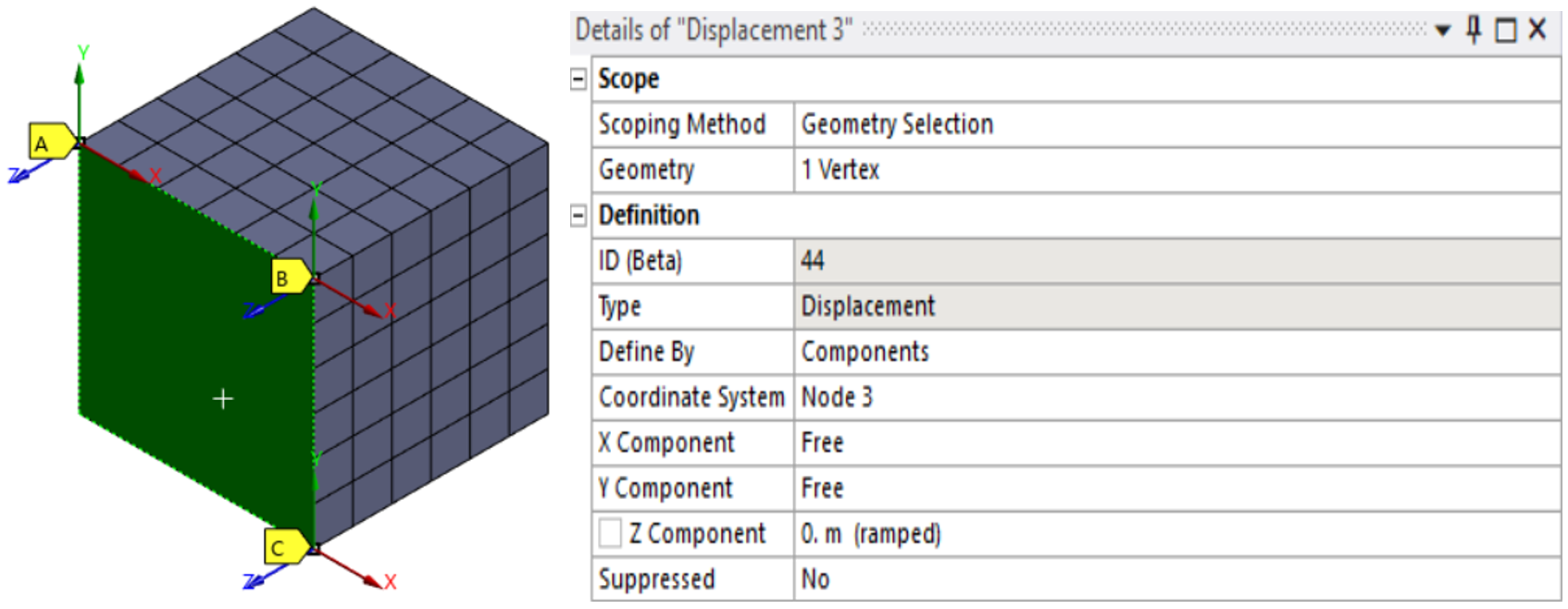
Example 1: Thermal Growth with the 3-2-1 Method
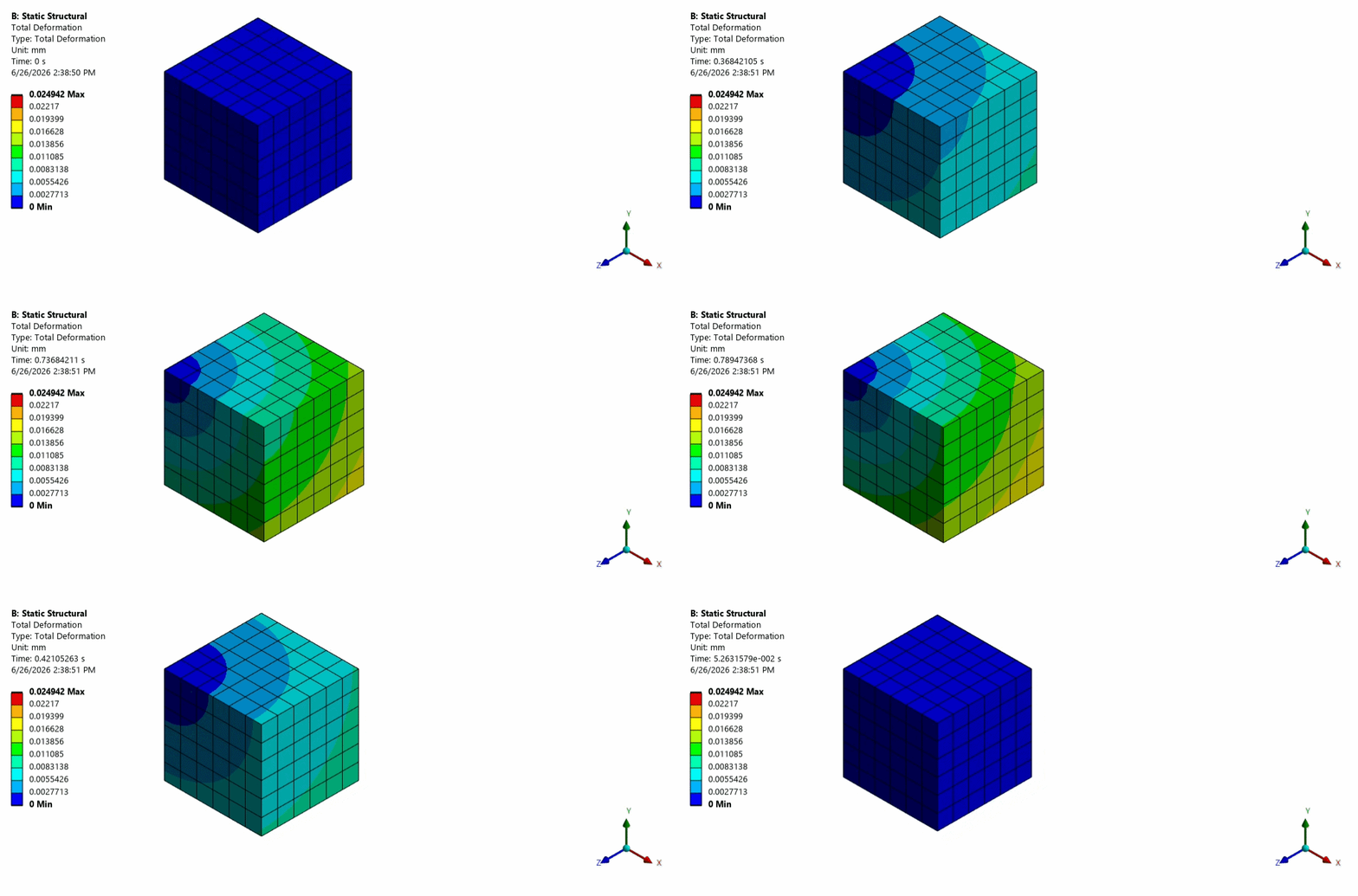
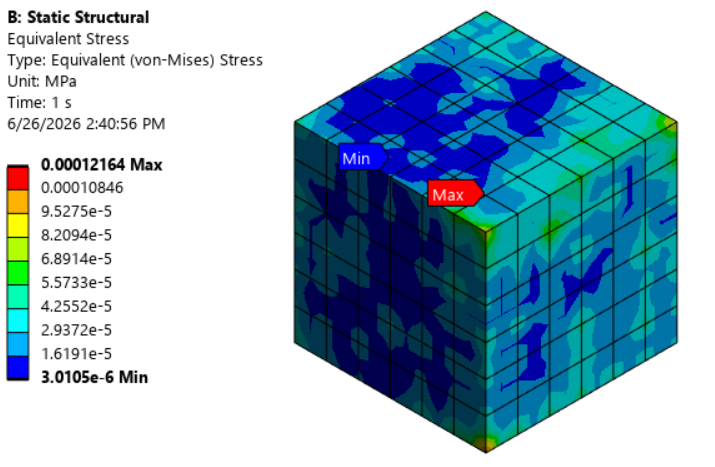
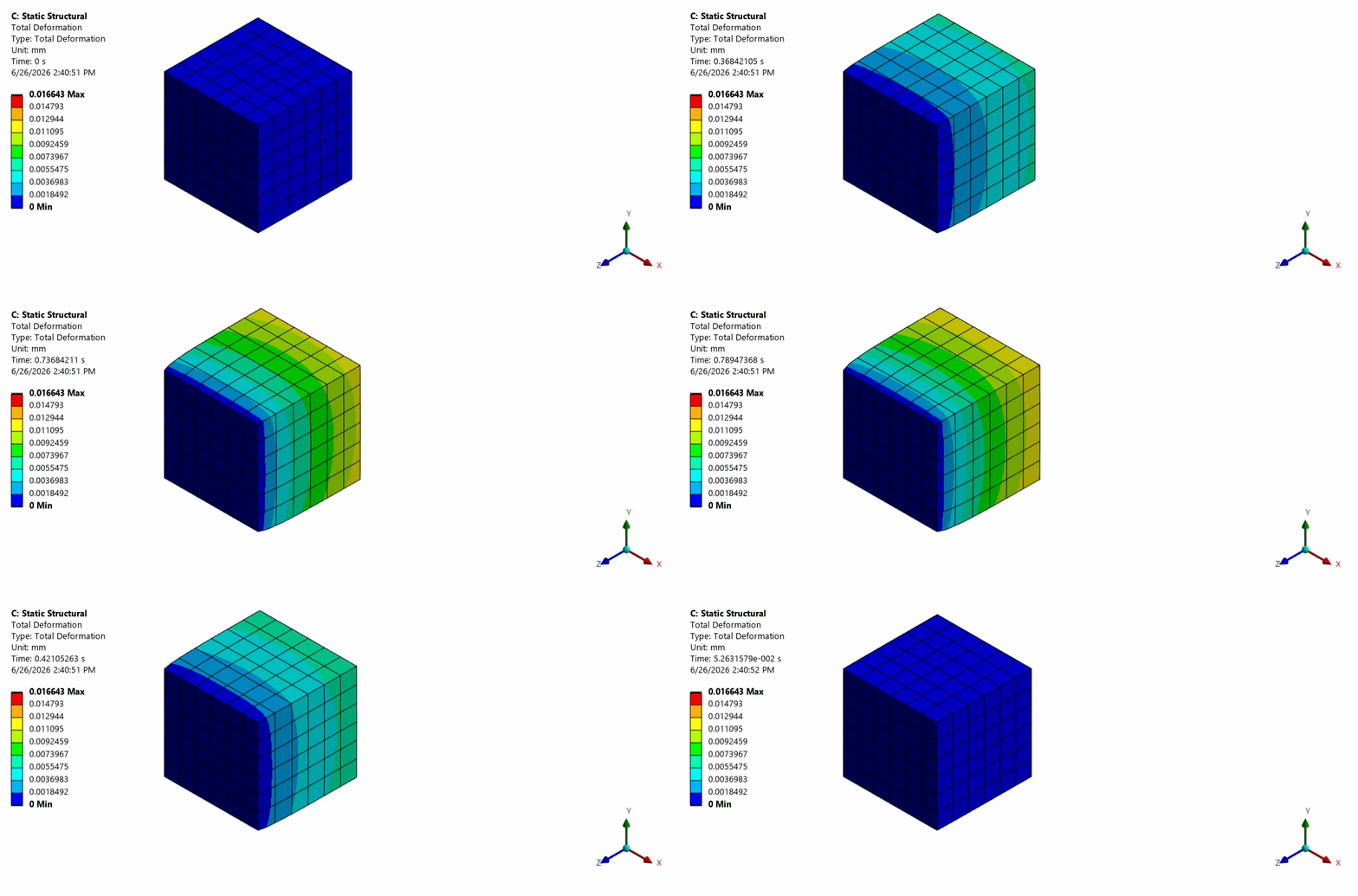
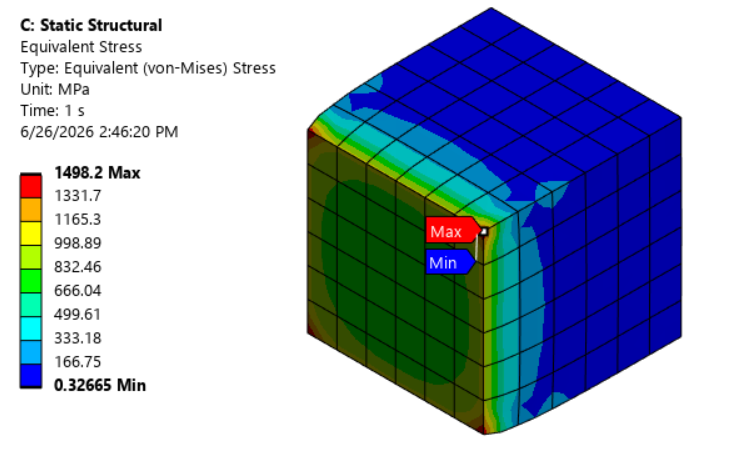
The 3-2-1 method of preventing rigid body motion has been applied to the cube model illustrated above. A thermal condition of a 200˚C temperature increase as then been applied to the body. Below are the resulting deformation and stresses of the cube model as well as a comparison to the same model with a simple fixed support with identical loading conditions.
Total Deformation with 3-2-1 Method
Equivalent Stress with 3-2-1 Method
Total Deformation with Simple Fixed Support
Equivalent Stress with Simple Fixed Support
Example 2: Free-Floating Submerged Vessel
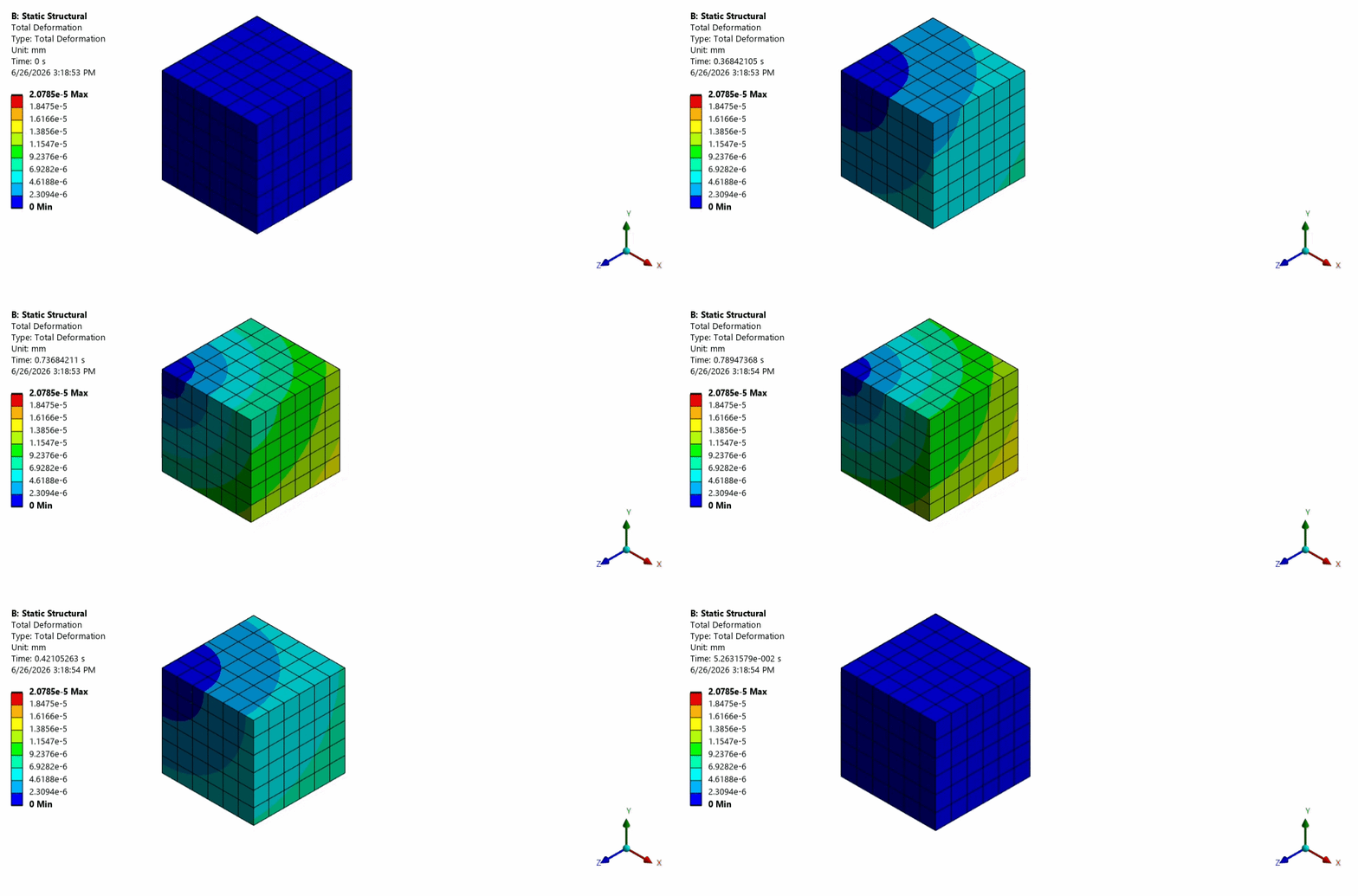
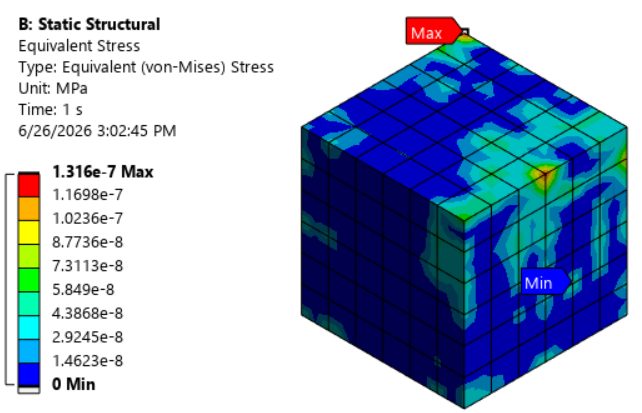
For the “free floating” model case where we would like to understand the stresses with out imposing any artificial stresses at the constraint locations. An example of this can be investigating the effects of water pressure on a submerged vessel. The same cube as before will have constant pressure applied to demonstrate no artificial stresses occurring.
Total Deformation with 3-2-1 Method
Equivalent Stress with 3-2-1 Method
Need Help with Boundary Conditions in Ansys Mechanical?
SimuTech Group’s structural engineers can help your team with the Ansys Mechanical 3-2-1 method, and with developing other reliable models, including boundary-condition selection, thermal expansion, free-floating structures, contact, and static structural analysis. Connect with SimuTech Group to discuss your simulation project.

Eric Probst
Staff Engineer – Structures, SimuTech Group
Eric Probst is a Staff Engineer at SimuTech Group with experience in finite element analysis, structural simulation, and mechanical design. His background includes aerospace structural analysis, FEA project leadership, analysis procedure development, and technical mentorship. He previously worked as an FEA Team Lead and Senior Failure Analysis Engineer and holds a B.S. in Mechanical Engineering from Arizona State University.