
 Contact Us
Introduction
Power Integrity (PI) analysis is a critical aspect of modern electronic design, particularly in high-performance applications where power delivery networks (PDNs) must reliably supply precise voltages to densely packed integrated circuits. It focuses on understanding the impedance characteristics of the PDN across frequency, which impact voltage regulation, noise margins, and overall system stability. Ansys SIwave provides specialized tools for signal and power integrity, including PDN impedance characterization and DC IR drop analysis, enabling engineers to optimize network design for minimal voltage droop and improved transient response.
When combined with thermal assessment using Ansys Icepak, designers gain a comprehensive view of how electrical performance translates into thermal behavior and overall reliability. This blog presents key results from DC IR drop, PI, and thermal analyses using Ansys tools.
DC IR Drop Analysis: Understanding Voltage Drop and Current Flow
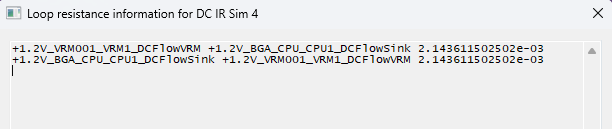
DC IR drop analysis provides key insights into voltage and current distribution within the PDN. It evaluates voltage distribution and surface current density for each rail net, allowing engineers to identify localized stress regions and current crowding effects. The analysis also calculates loop resistance between source and sink nodes, accounting for the total DC resistance of both power and ground return paths. In addition, a power tree representation is generated, illustrating the voltage drop along the entire power distribution path from source to load, helping to explain how power is delivered through the system and where losses occur.
To illustrate the results of a typical DC IR drop analysis, an example case is presented below.
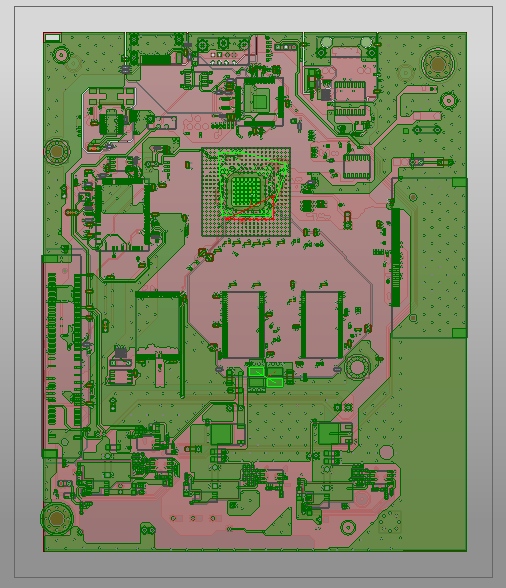
In the DC IR analysis, voltage sources and current sinks are assigned to the appropriate nets to represent the power delivery and load conditions of the system. Once the excitation setup is defined, the simulation is performed to evaluate the behavior of the PDN under DC conditions.
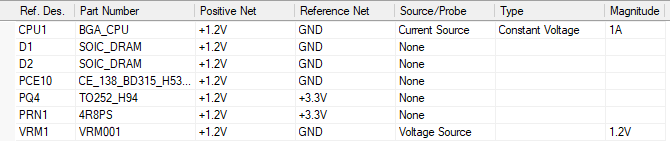
The resulting key outputs are used to assess system performance and are presented in the following figures:
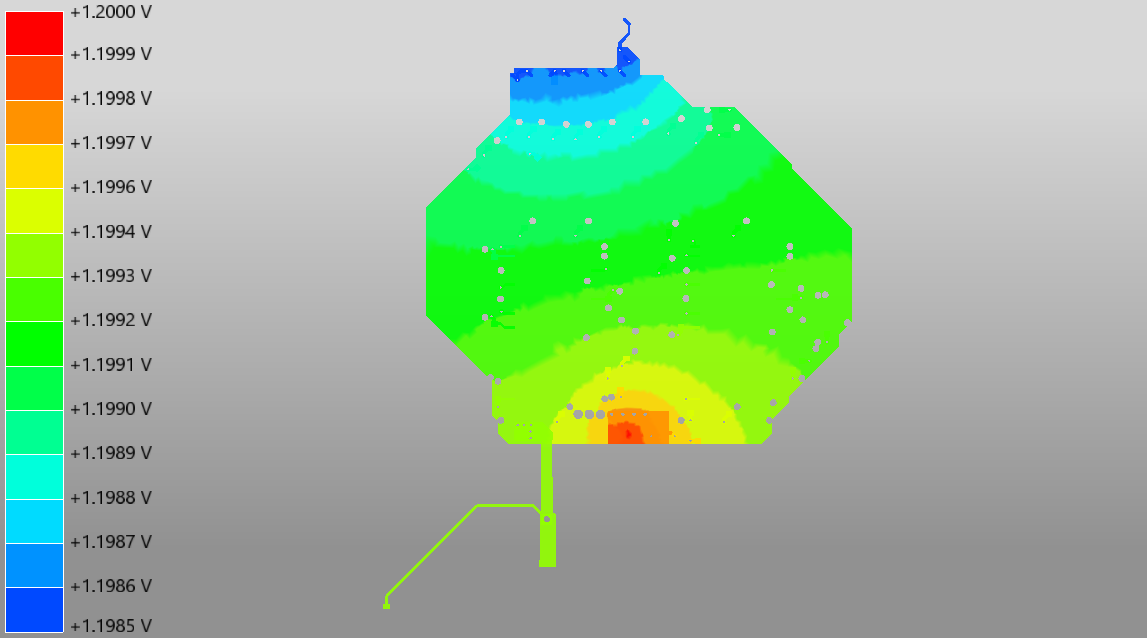
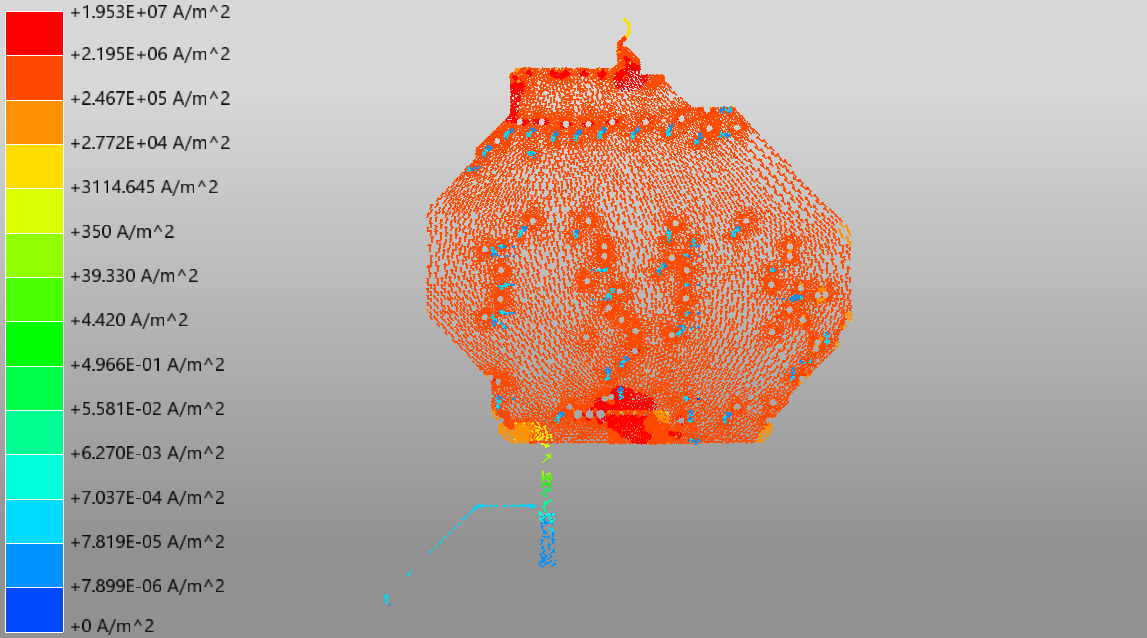

Power Integrity: Evaluating PDN Impedance and Decoupling Performance
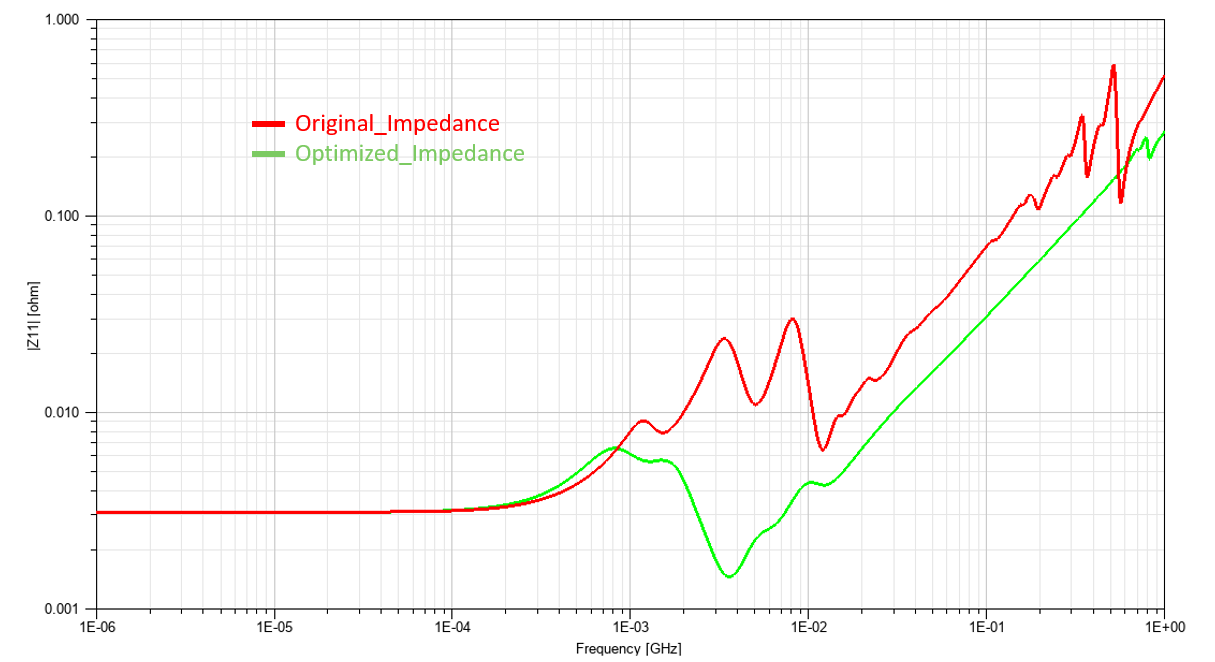
In this part of the DC IR drop analysis, PI is evaluated by examining the impedance behavior of the PDN and the effectiveness of the decoupling strategy. The impedance profile is analyzed across frequency to identify potential resonances and ensure that it remains within acceptable limits for stable voltage delivery. Decoupling capacitor optimization can be performed using impedance targets derived from allowable ripple specifications, along with vendor-specific capacitor models, to determine the most effective component selection and placement. This optimization helps reduce impedance below required limits while improving component efficiency through better placement and reduced redundancy.
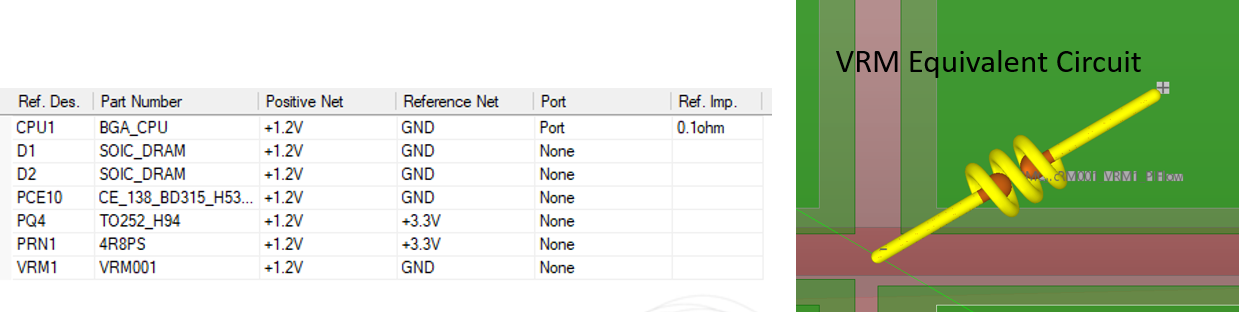
For the PI analysis setup, ports are used to properly excite the PDN and enable accurate impedance characterization.
The impedance results are then extracted for the selected net and used to evaluate its frequency-dependent behavior. The optimized results obtained using PI Advisor are also included to demonstrate the overall improvement in impedance performance across the frequency range.
Thermal Analysis: Linking Electrical Losses to Temperature
In addition to DC IR drop analysis, thermal analysis helps evaluate the temperature distribution resulting from electrical power losses in the system. Using Ansys Icepak, engineers can capture temperature rise across the PCB and components under operating conditions, identify thermal hotspots, and assess overall thermal behavior.
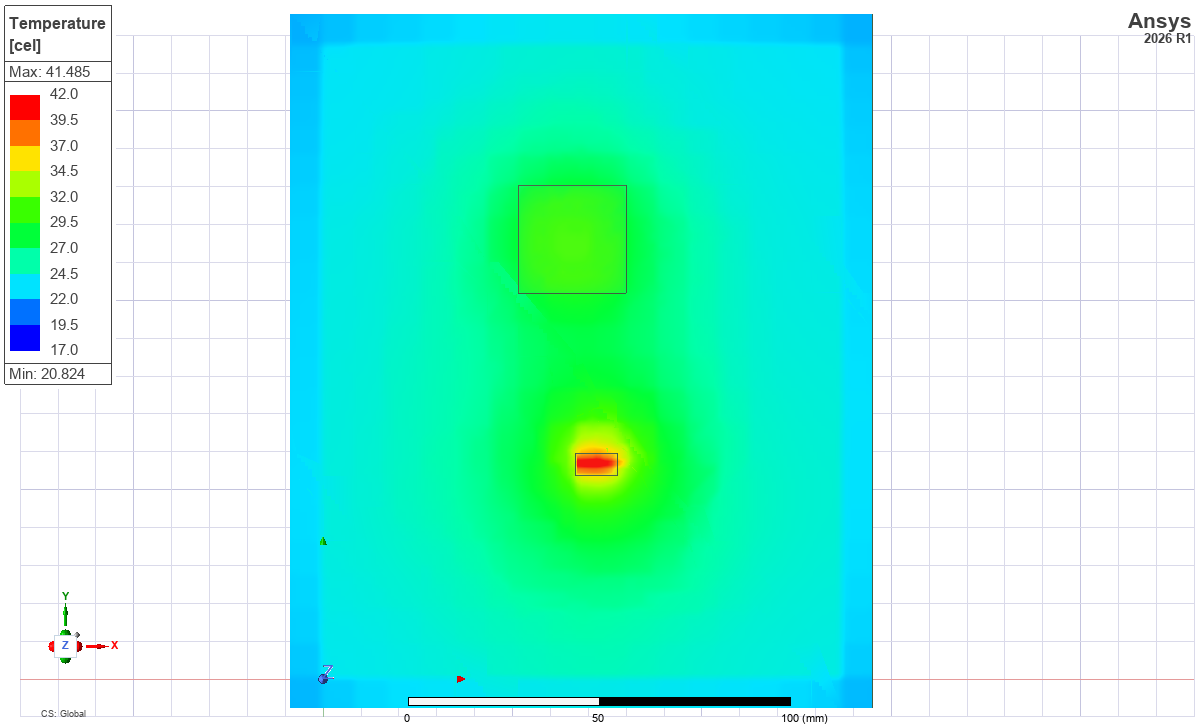
The thermal results include component-level temperatures, as well as junction and case temperatures, as summarized in the table below.
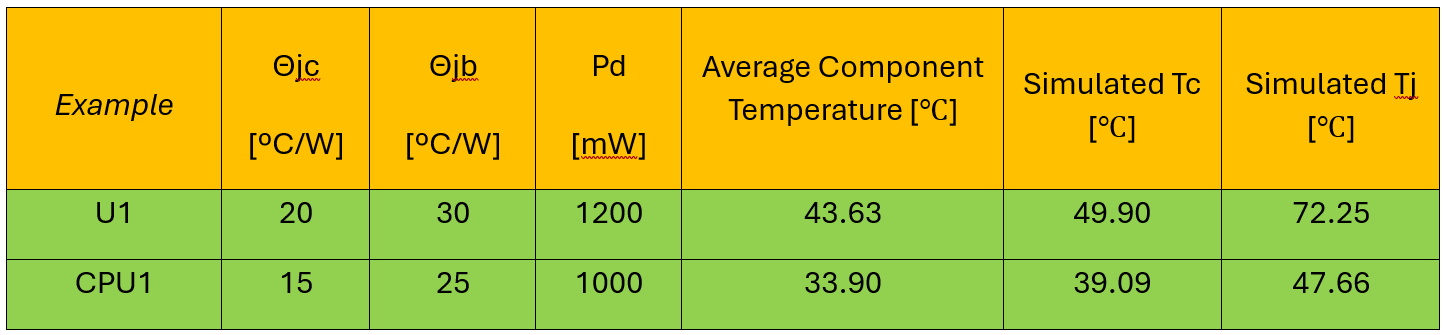
This analysis ensures that components operate within specified junction and case temperature limits and that the cooling strategy is sufficient to maintain safe operation under worst-case conditions.
DC IR Drop Analysis: In Conclusion
Modern electronic systems require a tightly integrated approach to power and thermal design. This workflow ensures:
- Accurate prediction of voltage drop
- Reliable power integrity performance
- Verified thermal safety margins
Ultimately, this leads to more robust, efficient, and reliable electronic systems.
Need Expert Help with Your Design? Our SI/PI experts specialize in Ansys tools for complex electronic systems. We help ensure your designs meet the most demanding specifications. Contact us today for any of your consulting, training, or mentorship needs.

Adel Benleulmi, PhD
Senior Staff Engineering Analyst, SimuTech Group
Adel Benleulmi is a Sr. Staff Engineering Analyst – RF/Microwave at SimuTech Group, specializing in high-frequency electromagnetic simulation, RF/microwave engineering, and electronics design workflows. His expertise includes power integrity, DC IR drop analysis, PCB-level electromagnetic behavior, and thermal-electrical simulation using Ansys tools. Adel supports engineering teams in evaluating complex electronic systems, improving design reliability, and connecting simulation results to real-world performance.