
 Contact Us
Design Challenges for Piezoelectric Actuators
Piezoelectric actuators are essential components in a range of industrial applications, including precision machinery, medical devices, and aerospace technologies. For instance, piezoelectric pumps and atomizers use the prescribed motion generated by piezoelectric actuators to deliver precise, controlled pumping and atomization of fluids. The piezoelectric actuators convert electrical energy into mechanical motion, making them essential for applications that require precise control and rapid response. However, designing effective piezoelectric actuators presents several challenges. One major difficulty is achieving the desired motion and force output while ensuring durability and reliability. Piezoelectric materials are often brittle, which can lead to mechanical failure under high-stress conditions. Furthermore, understanding the complex interactions between the electrical and mechanical domains is crucial for ensuring optimal performance. Engineers must also consider thermal effects that can degrade the material properties. Additionally, when evaluating overall actuator performance, it is important to account for fluid-structure interaction (FSI) in the design of systems that use piezoelectric atomizers and pumps.
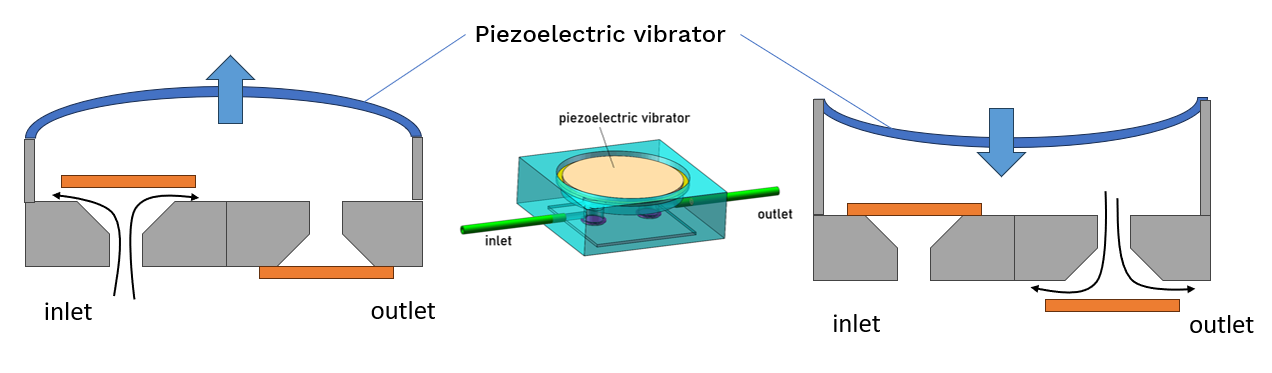
Piezoelectric Pump
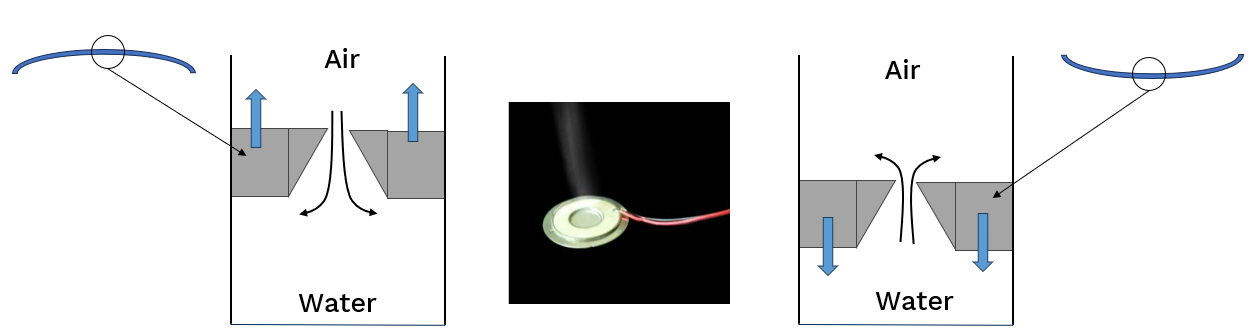
Piezoelectric Atomizer
Engineering Solution: Ansys Multiphysics Analysis
To tackle the challenges of piezoelectric actuator design, engineers utilize advanced multiphysics analysis in Ansys. CFD simulations in Ansys Fluent provide essential insights into the behavior of piezoelectric actuators under various conditions, thereby reducing dependence on physical prototypes. Ansys allows for coupled analyses that integrate mechanical, electrical, fluid, and thermal effects, capturing critical multiphysics interactions, such as Fluid-Structure Interaction (FSI). With Ansys Fluent and coupled analysis, engineers can model the relationship between mechanical deformation caused by piezoelectric excitation and the resulting fluid response. This method yields reliable performance predictions and facilitates the optimization of key design parameters. By leveraging multiphysics simulations, engineers can accelerate design iterations, mitigate risks, and ensure compliance with industry standards. This blog explores the CFD analysis process required for such multiphysics simulation.
Dynamic Mesh Motion in Ansys Fluent
Dynamic mesh motion in Ansys Fluent is a core capability for accurately simulating geometries that move and/or deform over time. This is especially valuable for piezoelectric actuators, where structural deformations directly impact fluid flow and overall system behavior. By leveraging dynamic mesh motion, engineers capture real-time actuator responses to electrical signals, revealing transient multiphysics interactions and enabling precise evaluation of actuator performance and reliability.
Setting Up Piezoelectric Actuator Models in Fluent
Modeling piezoelectric actuators in Ansys Fluent involves several key steps:
- Create or import the geometry and prepare the name selections needed for dynamic mesh motion zones.
- Generate the initial mesh, accounting for boundary motion.
- Establish the prescribed motion using profile/UDF based on the characteristics of the actuator’s motion or the structural deformation resulting from piezoelectric excitation.
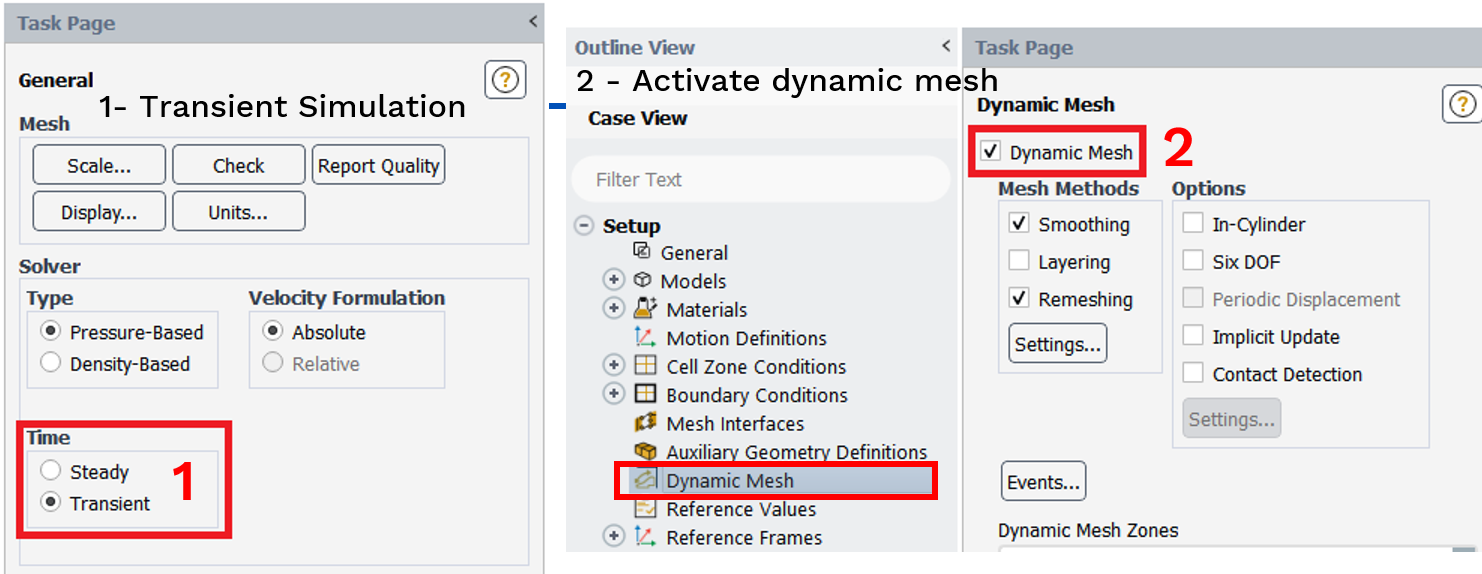
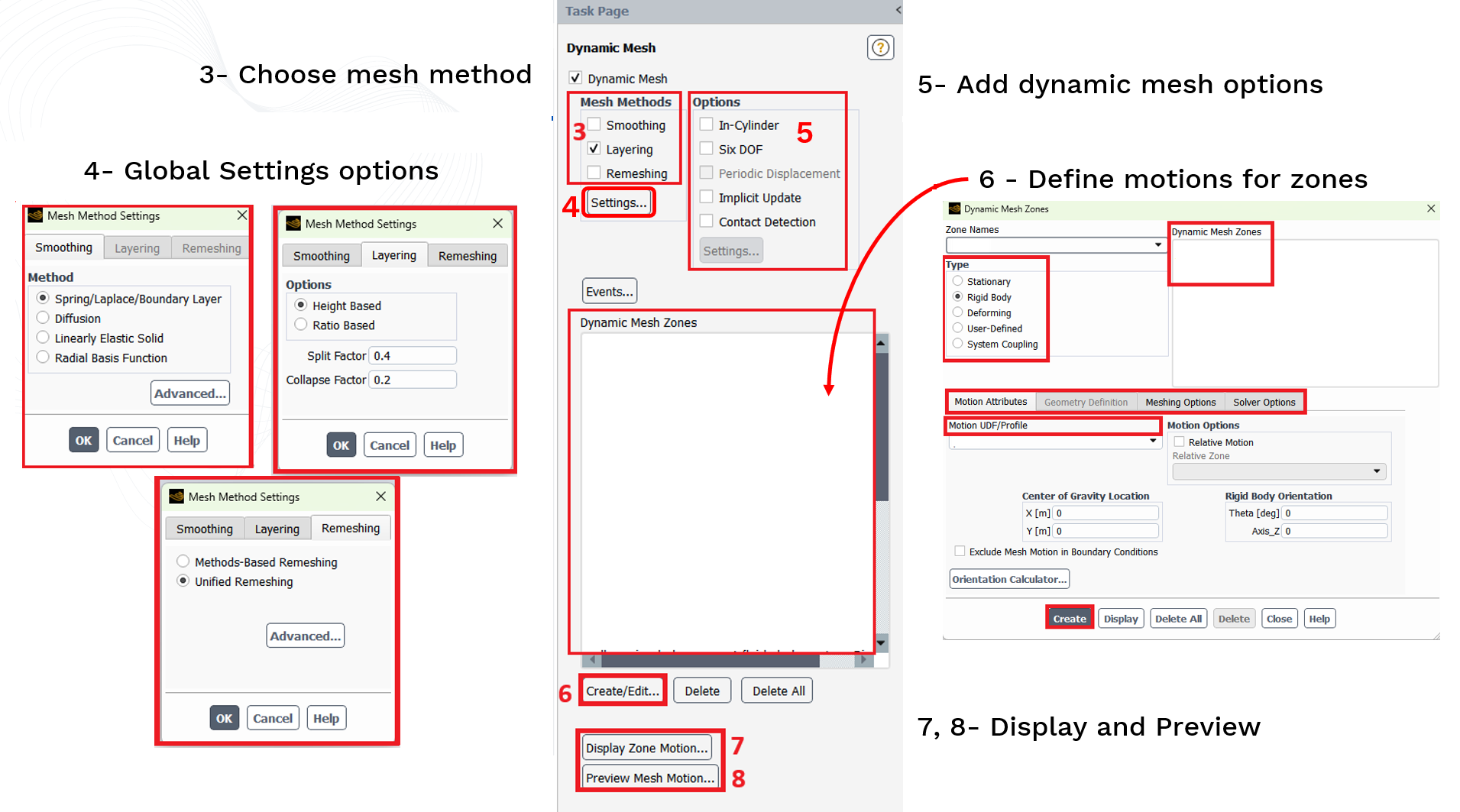
- Configure the dynamic mesh setup by selecting appropriate mesh motion methods and tuning parameters to ensure quality mesh deformation throughout the simulation.
- Set up the Fluent model.
- Run the transient simulation and analyze the results. We can use this data to refine the design and optimize the actuator for project-specific applications.
The following figures illustrate the overview of the dynamic mesh setup process in Ansys Fluent.
Video Demonstrations
Video 1: This video highlights practical examples of piezoelectric actuators and demonstrates how to implement prescribed motion with the dynamic mesh technique to model deformations caused by piezo excitation. It also covers the setup of the Fluent VOF multiphase model for simulating water-drop formation and the results.
Video 2: This video examines different models for air (constant density and real gas) and water (constant density and compressible liquid). It also discusses how varying excitation parameters in piezoelectric actuators influence the performance and dynamics of drop formation.
Ansys Solution Benefits
Using dynamic mesh motion in Ansys Fluent offers numerous benefits for the design and analysis of piezoelectric actuators. It provides a more accurate representation of the actuator’s behavior, leading to better performance predictions and design optimizations. Additionally, dynamic mesh motion allows for the simulation of complex interactions between the actuator and its environment, such as fluid-structure interactions (FSI). This comprehensive approach helps engineers identify potential issues early in the design process, reducing the risk of costly failures and ensuring the actuator meets all performance requirements.
Need help with piezoelectric actuator simulation or dynamic mesh setup? SimuTech Group’s CFD consulting engineers can help you set up coupled multiphysics simulations in Ansys Fluent. For more on Fluent’s evolution and capabilities, read our article on the evolution of user-friendly CFD in Fluent. Contact us to discuss your simulation needs.