
 Contact Us
Introduction to Sensitivity Analysis in Ansys optiSLang
Sensitivity analysis in Ansys optiSLang helps engineers understand how design parameters influence simulation results and overall product performance. By identifying the variables with the greatest impact, engineers can focus their optimization efforts, reduce unnecessary complexity, and explore design alternatives more efficiently.
Ansys optiSLang supports a range of sampling methods for evaluating design spaces, from Monte Carlo and Latin Hypercube Sampling to more targeted experimental designs. This article examines these methods, their advantages, and how selecting an appropriate sampling strategy can improve simulation-driven design optimization.
Understanding Sensitivity Analysis and Sampling Methods in Ansys optiSLang
The following video explores sensitivity analysis in Ansys optiSLang, highlighting the sampling methods available for evaluating design parameters and their influence on simulation results. It explains how different approaches support design space exploration, helping engineers select appropriate sampling strategies for more efficient optimization workflows.
What is Sensitivity Analysis in Ansys optiSLang?
Sensitivity analysis quantifies how changes in input parameters impact performance metrics.
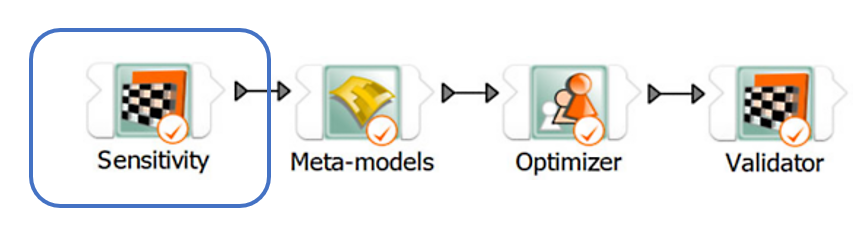
By focusing on variables that matter most, engineers can eliminate unnecessary complexity and optimize their designs more efficiently. OptiSLang excels in sensitivity analysis, offering a variety of sampling methods to drive simulations.
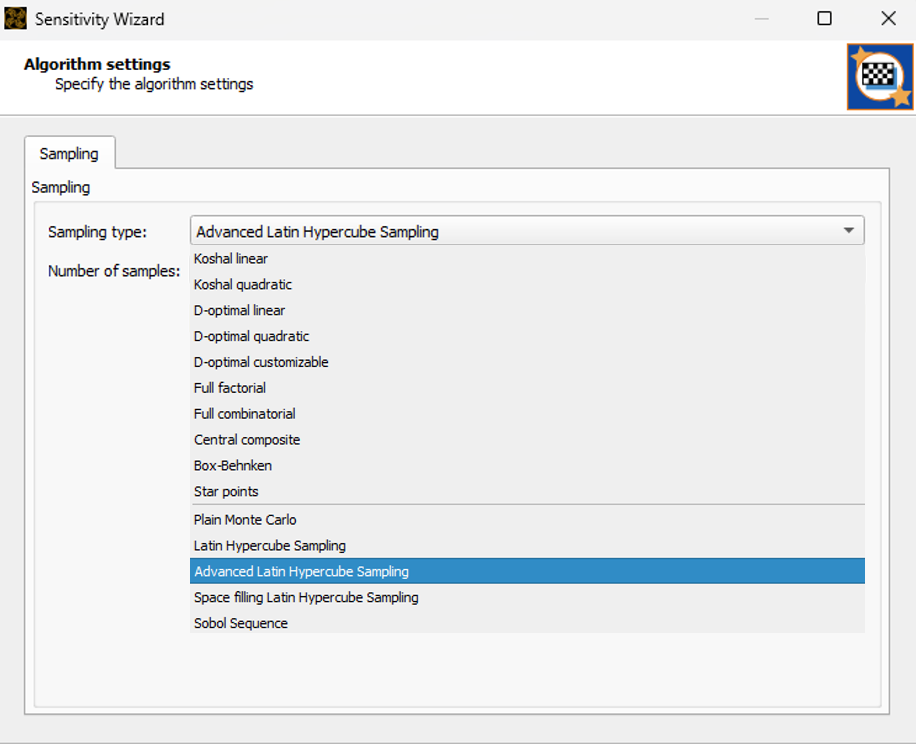
The Core Types of Sampling Methods
1. Uniform Sampling
In sensitivity analysis in Ansys optiSLang, uniform sampling provides a straightforward approach to exploring the design space by generating samples across specified parameter ranges. While simple to implement, it may require more samples than advanced methods to achieve consistent coverage. Examples include:
- Monte Carlo Sampling: Employs random distributions for exploring high-dimensional spaces.
- Sobol Sampling: Uses quasi-random sequences to reduce clustering, improving accuracy without increasing sample sizes.
- Full Factorial: Systematically evaluates all possible combinations of parameter levels for exhaustive exploration.
- Latin Hypercube Sampling (LHS): Divides the design space into equal intervals, ensuring each interval is sampled once.
2. Focused Sampling
Focused methods zoom in on specific areas of interest, often where critical changes are expected. These methods are valuable for studying non-linear behaviors or critical thresholds:
- Central Composite Sampling: Concentrates samples near the edges of the design space to understand boundary behavior.
- Box-Behnken Design: Focuses on midpoints and critical intersections, reducing the number of simulations while maintaining accuracy.
3. Optimal Sampling
Optimal methods aim to achieve maximum data efficiency by balancing coverage and precision:
- Space-Filling LHS: Enhances Latin Hypercube by ensuring uniform spacing between samples.
- D-optimal Sampling: Targets statistically significant points for improved regression model quality.
4. Hybrid and Custom Sampling
Hybrid methods combine aspects of uniform, focused, and optimal strategies, offering flexibility for complex challenges. Custom sampling allows users to define unique sampling strategies tailored to their specific problem, blending expertise with automation for maximum efficiency.
Why Sampling Strategy Matters
The choice of sampling method you make in Ansys optiSLang impacts the accuracy and efficiency of the sensitivity analysis. While uniform methods are ideal for global exploration, focused approaches excel in understanding specific regions. Hybrid and custom strategies offer adaptability, allowing engineers to address unique design requirements.
Applying Sampling in optiSLang
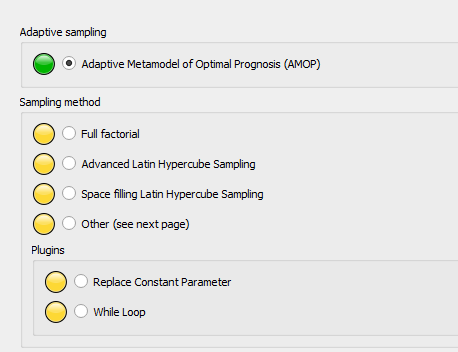
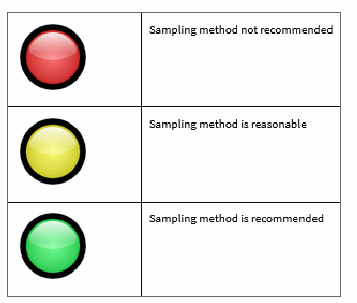
The interface highlights the most appropriate methods based on problem characteristics. Color-coded recommendations make it easier for users to select suitable strategies, ensuring efficient exploration and reliable results.
Improving Design Optimization with Sensitivity Analysis
Selecting an appropriate sampling method is an important step in building an efficient simulation-driven optimization workflow. Ansys optiSLang provides engineers with multiple approaches for exploring design spaces, identifying influential parameters, and developing a stronger understanding of system behavior.
These insights can also support subsequent optimization activities, including the development of surrogate models and Metamodels of Optimal Prognosis (MOPs).
Continue exploring these concepts in our tutorial on building a robust metamodel for electric motor optimization with Ansys optiSLang and Motor-CAD.