
 Contact Us
Ansys FENSAP-ICE
Ansys FENSAP-ICE enables engineers to simulate and analyze in-flight icing and ice accretion across a wide range of aerospace and defense applications.
Ansys FENSAP-ICE enables engineers to simulate and analyze in-flight icing and ice accretion across a wide range of aerospace and defense applications.
Ansys FENSAP-ICE helps engineers simulate in-flight icing, ice accretion, and ice protection performance for aerospace and defense applications where safety, certification, and aerodynamic performance are critical. Built to model the complex physics of icing across challenging geometries, FENSAP-ICE supports the analysis of aircraft, rotorcraft, UAVs, jet engines, nacelles, probes, sensors, and other exposed systems—giving engineering teams deeper insight earlier in the design process.
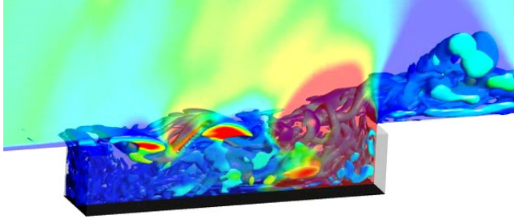
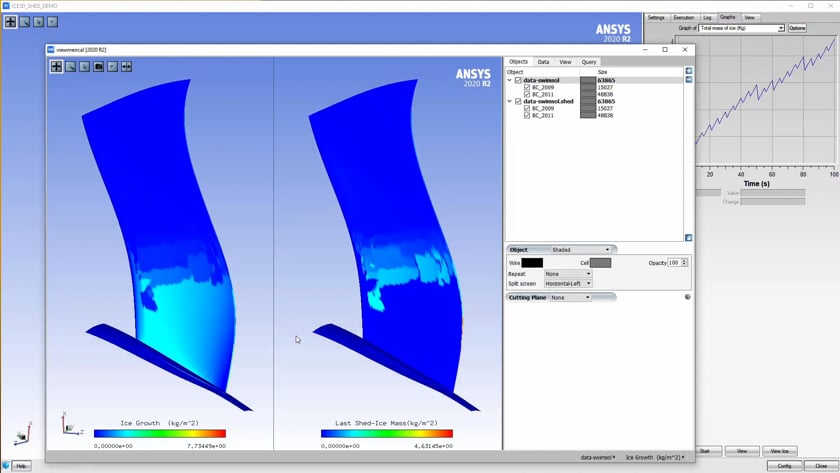
Analyze ice shedding behavior on rotating components with FENSAP-ICE to better understand downstream risk, system performance, and safety implications. This capability helps engineers study how accumulated ice releases under operating conditions, making it especially valuable for rotors, propellers, and other rotating aerospace components exposed to icing environments.
See how FENSAP-ICE models ice shedding on rotating components in this quick demonstration, showcasing a key workflow for evaluating in-flight icing behavior across aeronautical applications.
FENSAP-ICE supports a wide range of icing simulation workflows, helping engineers evaluate ice formation, performance impact, and ice protection strategies across diverse flight conditions and component types.
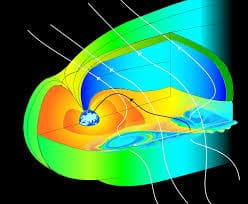
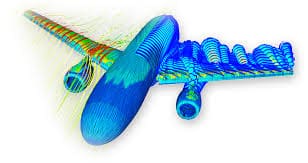
Simulate rime, glaze, and mixed ice accretion to better understand how atmospheric conditions affect ice growth on critical surfaces. FENSAP-ICE helps engineers evaluate accretion patterns, thickness, and shape so they can assess performance risk and make better-informed design decisions earlier in development.
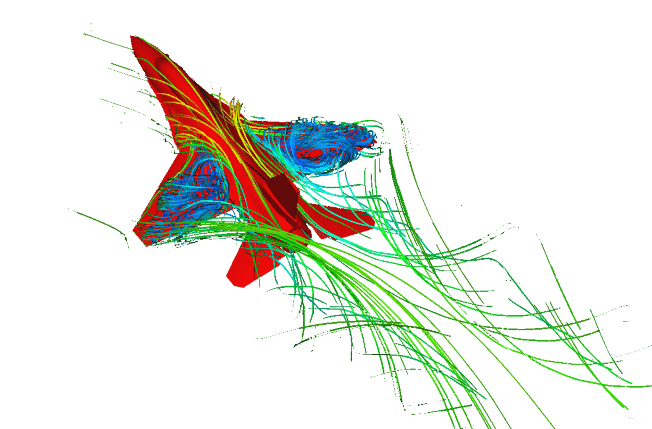

Quantify how ice buildup affects lift, drag, pressure distribution, and overall aerodynamic performance. With FENSAP-ICE, engineering teams can connect ice accretion results to downstream aerodynamic penalties, making it easier to evaluate risk, compare design alternatives, and support certification-focused analysis.
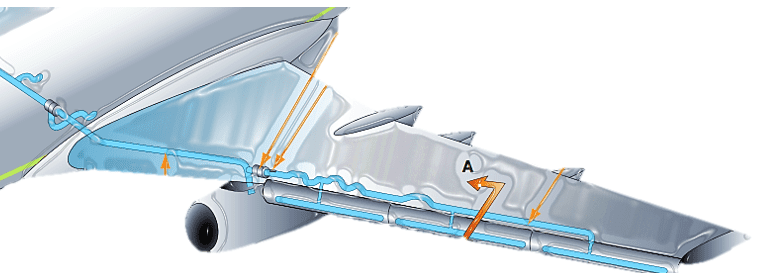
Model challenging icing conditions involving ice crystals and supercooled large droplets that can be difficult to capture through testing alone. FENSAP-ICE enables engineers to study these complex environments in greater detail, improving visibility into icing behavior for engines, airframes, and other sensitive systems.
Evaluate icing behavior in turbomachinery environments where rotating components, airflow behavior, and thermal effects interact in complex ways. FENSAP-ICE helps engineers analyze ice accretion and related performance concerns in propulsion-related applications, supporting more informed design and mitigation strategies.
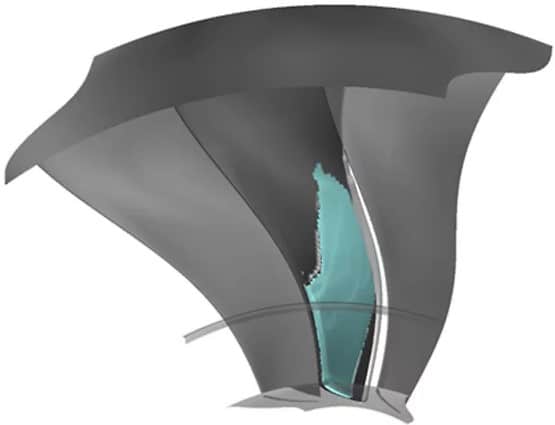
Assess the effectiveness of ice protection approaches and intake-related performance under icing conditions. FENSAP-ICE helps engineers study how anti-icing and de-icing systems perform across operating scenarios so they can improve system reliability, reduce risk, and better support design validation.
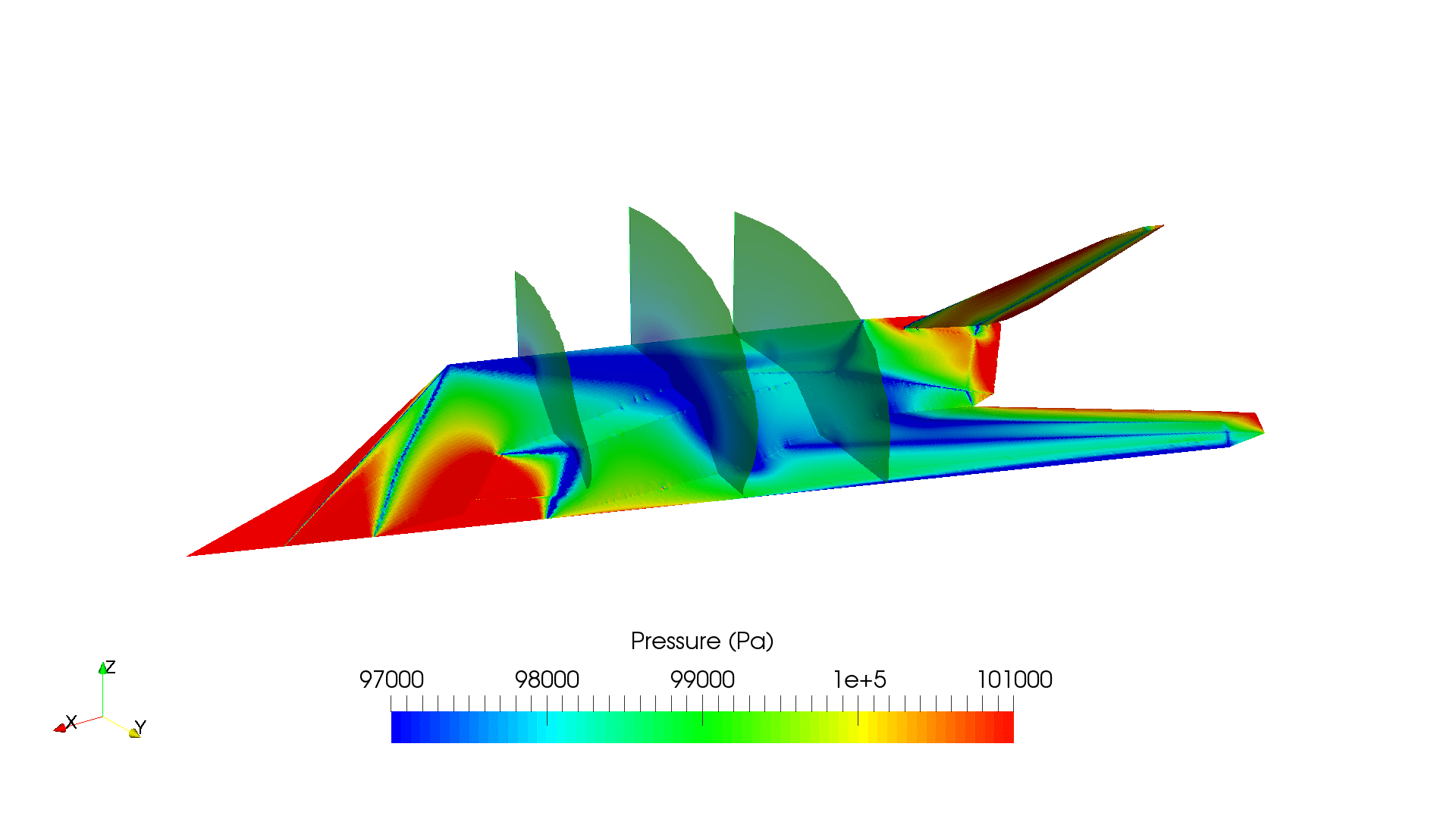
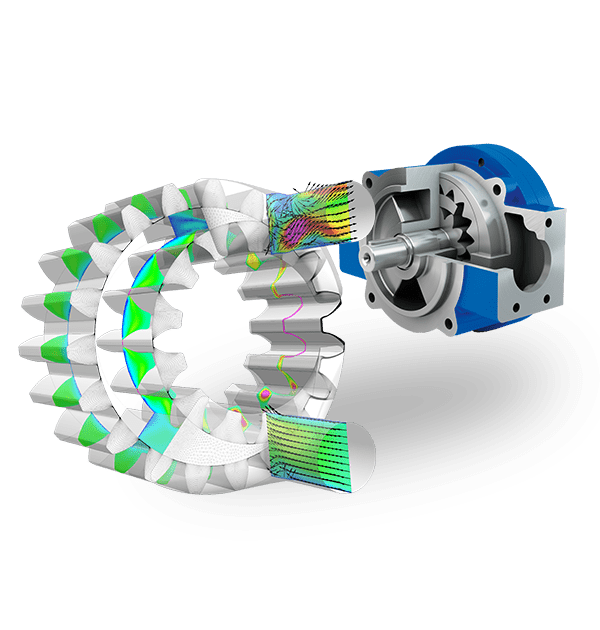
Improve mesh and modeling strategies for impingement heat transfer analyses on aircraft surfaces exposed to icing conditions. This helps engineers capture critical thermal and flow behavior more accurately, leading to better insight into surface heating performance and more reliable simulation results.
Looking for a deeper look at how FENSAP-ICE is used in practice? This related blog series highlights key icing simulation workflows, application insights, and technical considerations, giving engineers additional context beyond the core product overview.
Ansys’ most powerful computational fluid dynamics tool, Fluent, includes well-validated physical modeling capabilities to deliver fast, accurate results across the widest range of CFD and multiphysics applications.
Ansys CFX is a high-performance computational fluid dynamics tool that delivers reliable and accurate solutions quickly for a wide range of applications, including leading capabilities for rotating machinery.
Ansys EnSight is the market leader for data visualization. Its post-processing tool includes models with more than hundreds of millions of cells, providing engineers with insights unavailable elsewhere.
Ansys Polyflow provides advanced fluid dynamics technology for companies in the polymer, glass, metals, and cement processing industries.
Ansys Chemkin-Pro is the gold standard for modeling and simulating complex gas phase and surface chemistry reactions for fast, accurate development of combustion systems.
Ansys TurboGrid complements rotating machinery simulation with a specialized, easy-to-use tool for the rapid 3D design of rotating machinery components.
Ansys Forte accurately simulates IC engine combustion performance with nearly any fuel, helping engineers rapidly design cleaner burning, high-efficiency, fuel-flexible engines.
Ansys Vista TF complements rotating machinery simulation by enabling engineers to quickly develop blade geometries that achieve desired performance objectives.
Ansys BladeModeler complements rotating machinery simulation with a specialized, easy-to-use tool for the rapid 3D design of rotating machinery components.
Mosaic Mesh, a Hexahedral Dominant Mesh Software accelerates the meshing process with a reduced face count, higher quality cells and efficient parallel scalability.
FENSAP-ICE is the premier in-flight icing simulation system. Its innovative, graphical environment provides intuitive file management and makes it easy to interact between simulation modules.
Fluent meshing provides automation to highly crafted meshing. Methods available cover the meshing spectrum of high-order linear elements to tetrahedral and polyhedral analysis.
To benefit from all the computational fluid dynamic solvers that Ansys offers, choose the CFD Enterprise toolkit. CFD Enterprise offers full versions of Ansys Fluent, AIM Pro, and CFX to help you optimize product performance with well-validated physical modeling capabilities that deliver quick, accurate results.
Engineers use Ansys CFX for the most accurate, robust, and rapid simulation for rotating machinery such as fans, pumps, compressors, and gas and hydraulic turbines. Companies in the glass, metals, polymer, and cement industries can choose Ansys Polyflow for advanced fluid dynamics technology.
Today’s experienced engineers need well-validated CFD results to analyze products quickly and thoroughly. With full versions of Ansys Fluent, CFX, and SpaceClaim included, CFD Premium provides accurate, quick, and robust results.
Engineers can simulate IC engine combustion performance with Ansys Forte. Simulate with nearly any type of fuel to quickly design high-efficiency, clean-burning engines that are fuel flexible. To ensure speed and safety for in-flight icing certification, Ansys FENSAP-ICE provides accurate, rapid aircraft icing assessments, along with other comprehensive analysis in the aerospace industry.
Whether you’re evaluating ice accretion, thermal effects, aerodynamic penalties, or protection strategies, SimuTech Group can help you get more value from FENSAP-ICE with expert support, training, and consulting.